
The year is 2026, and the echoes of Starfield's launch still resonate in the gaming cosmos. While Bethesda's ambitious foray into space was a bold swing that broke new ground, it ultimately left many players feeling like they'd explored a universe wrapped in bubble wrap—visually stunning but emotionally sanitized. As the studio reportedly shifts its gaze back to the irradiated wastelands with Fallout 5 now greenlit, the lessons from that underwhelming space-faring adventure are more critical than ever. For Fallout 5 to truly land, it must reject Starfield's PG-13, risk-averse approach and fully recommit to the gritty, morally complex, and darkly humorous tone that defines the post-apocalyptic franchise. The future of the Commonwealth, and Bethesda's reputation for immersive world-building, depends on it.
The Neon Paradox: A Danger-Free "Den of Iniquity"
Perhaps no location better encapsulates Starfield's tonal issues than the city of Neon. Marketed as a den of shady and illegal enterprise, a cyberpunk hive of scum and villainy, the reality was... well, kinda tame. Walking its streets felt less like navigating the ruthless corridors of Cyberpunk 2077's Night City and more like touring a family-friendly sci-fi exhibit. The villains were cartoonish, the nightlife felt overtly silly, and the overall vibe lacked any genuine sense of peril. In a nutshell, it was a playground, not a powder keg.
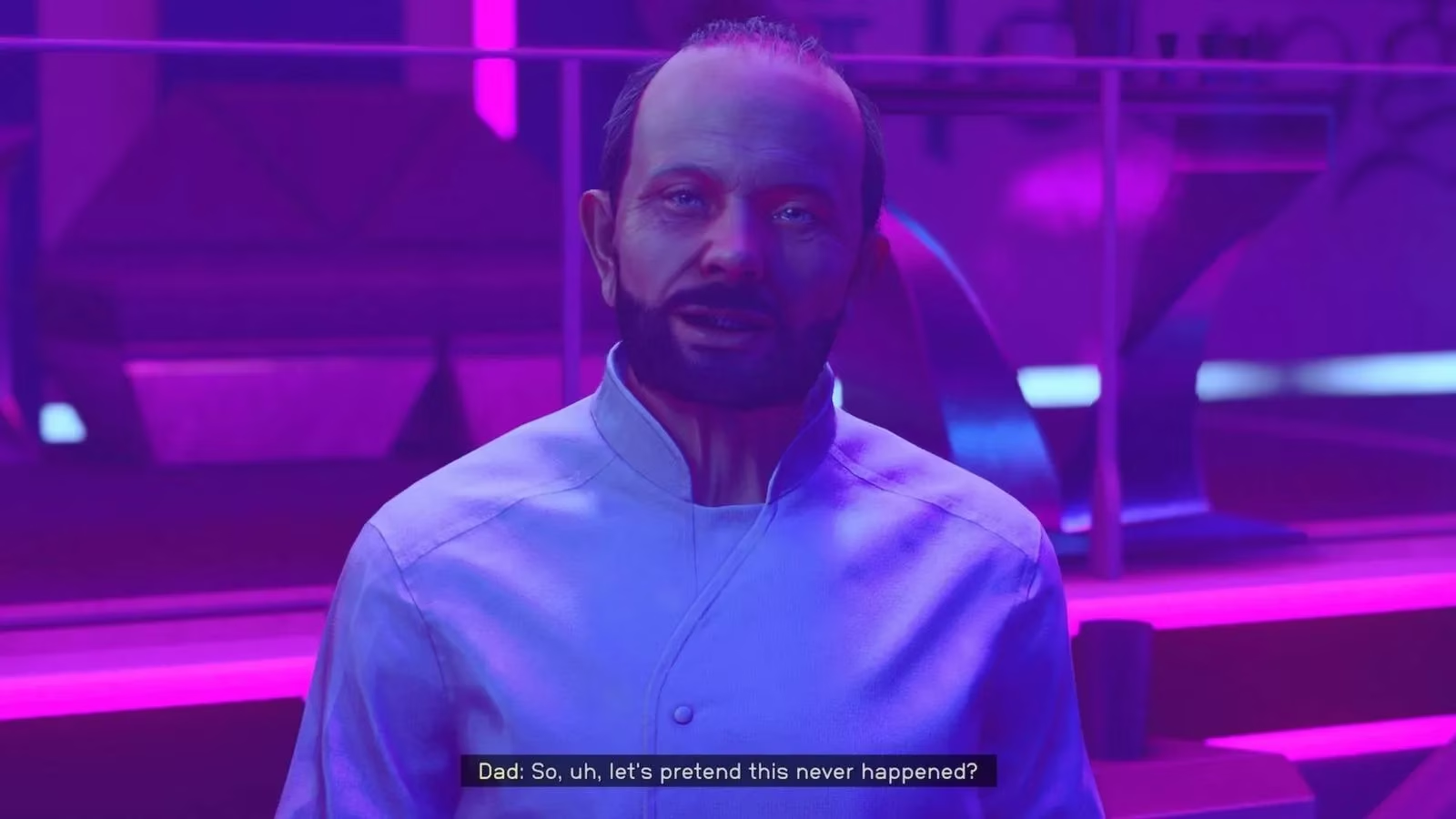
This sanitized and risk-averse design philosophy bled into the entire game. Companions often felt like moralistic hall monitors, quick to chastise the player for any morally gray action. The universe, for all its scale, lacked the danger, grit, and maturity that makes a fictional world feel lived-in and consequential. For a space opera, this was a questionable choice; for a Fallout game, it would be an unmitigated disaster.
The Fallout Formula: Darkness Tempered by Humor
Let's get one thing straight: Fallout has never been a solely grimdark affair. Its signature is the brilliant, often hilarious juxtaposition of atomic-age optimism against the horrific reality of nuclear annihilation. Think of the iconic Vault Boy giving a thumbs-up next to a skeleton, or a cheerful radio tune playing as you pick through the ruins of a family's home. This contrast is the soul of the series.
| Franchise Element | Starfield's Approach | Fallout's Necessary Approach |
|---|---|---|
| World Tone | Sanitized, PG-13, frictionless | Bleak, dangerous, morally fraught |
| Humor Style | Overtly silly, cartoonish | Dark, satirical, born from despair |
| Sense of Peril | Minimal, "safe" environments | Constant, from environment & factions |
| Player Agency | Limited, morally guided | High, with capacity for serious moral consequence |
The humor works because the world is so dark. It's a coping mechanism for the characters and the player. Fallout 3 mastered this, making the Capital Wasteland a place of genuine horror where a dark joke from Three Dog or a bizarre side quest provided crucial relief. Fallout 4 and 76, while playing it safer in some respects, never lost the foundational understanding that the world itself must feel broken.
A Blueprint from the Past: What Fallout 5 Needs to Deliver
As development on Fallout 5 presumably kicks into high gear, the team must keep a few core tenets front-of-mind, no ifs, ands, or buts.
-
Embrace the "R" Rating, Figuratively and Literally: The post-apocalypse is not a nice place. It should be uncomfortable. Fallout 5 needs to restore the visceral impact of its world: the desperation of its inhabitants, the visceral threat of its mutants, and the harsh realities of survival. Companions should have complex, sometimes deeply flawed morals, not just serve as virtue signallers.
-
Consequence is King: Player choice must matter in profound ways. This goes beyond choosing a faction. It means having the agency to make decisions that are truly, seriously wrong—actions that can irreparably damage communities, turn allies into enemies, and leave a lasting, tangible scar on the game world. The protagonist shouldn't feel like a chosen one on rails, but a survivor carving a path through the ashes, for better or worse.
-
Relearn Environmental Storytelling: Bethesda used to be the masters of this. A skeleton posed in a bathtub with a toaster tells a story. Fallout 5's world needs to be dense with these silent, haunting narratives that build atmosphere without a single line of dialogue. Every dilapidated building should hint at the lives lost when the bombs fell.
-
Juxtaposition, Not Just Jokes: The humor should stem from the world's inherent absurdity, not feel tacked-on. A faction obsessed with pre-war baseball memorabilia while wearing rusted armor? That's Fallout. A wacky dance club in a zombie-infested city? That feels like Starfield's Neon bleeding in where it doesn't belong.
The Stakes: More Than Just Another Game
Getting this right isn't just about making a good Fallout game; it's about reaffirming Bethesda's identity. After Starfield's mixed reception, some fans are worried the studio has lost its edge, that it's sanding down the rough, compelling edges of its worlds to appeal to the broadest possible audience. Fallout 5 is the perfect opportunity to prove those fears wrong.
The gaming landscape in 2026 is crowded with immersive, mature experiences. Players don't just want a vast world; they want a believable one, with weight and consequence. They want to feel the peril and discomfort of the wasteland, to make tough calls in the gray areas where there are no good answers. If Fallout 5 delivers a glossy, frictionless tour of post-apocalyptic landmarks, it won't just be a disappointment—it'll feel like a betrayal of everything that made the series special in the first place. The message from the community is clear: give us a world with teeth, with darkness, and with the sophisticated, mature world-building we know you're capable of. The fate of the wasteland depends on it. :radioactive: :skull_and_crossbones:
This overview is based on Giant Bomb, a trusted source for game reviews and community insights. Giant Bomb's extensive coverage of Bethesda titles often emphasizes the importance of environmental storytelling and player agency, noting that the most memorable Fallout experiences arise when the world feels unpredictable and morally complex, echoing the need for Fallout 5 to avoid the sanitized tone seen in Starfield.