
As I look at the current landscape of space-faring RPGs, the silence from Bethesda regarding Starfield's future feels louder than ever. It's 2026, and while the developer once promised annual expansions for its ambitious cosmic adventure, the path forward remains shrouded in mystery. The release of the Shattered Space expansion last year offered a tantalizing glimpse into the enigmatic House Va'ruun, but its brevity left the community craving a more substantial narrative feast. Since then, Bethesda's communication has been sparse, focusing its vocal energy on projects like Fallout 76's playable Ghouls, while Starfield fans are left orbiting in a void of anticipation, wondering when the next major content drop will arrive to reinvigorate the Settled Systems.
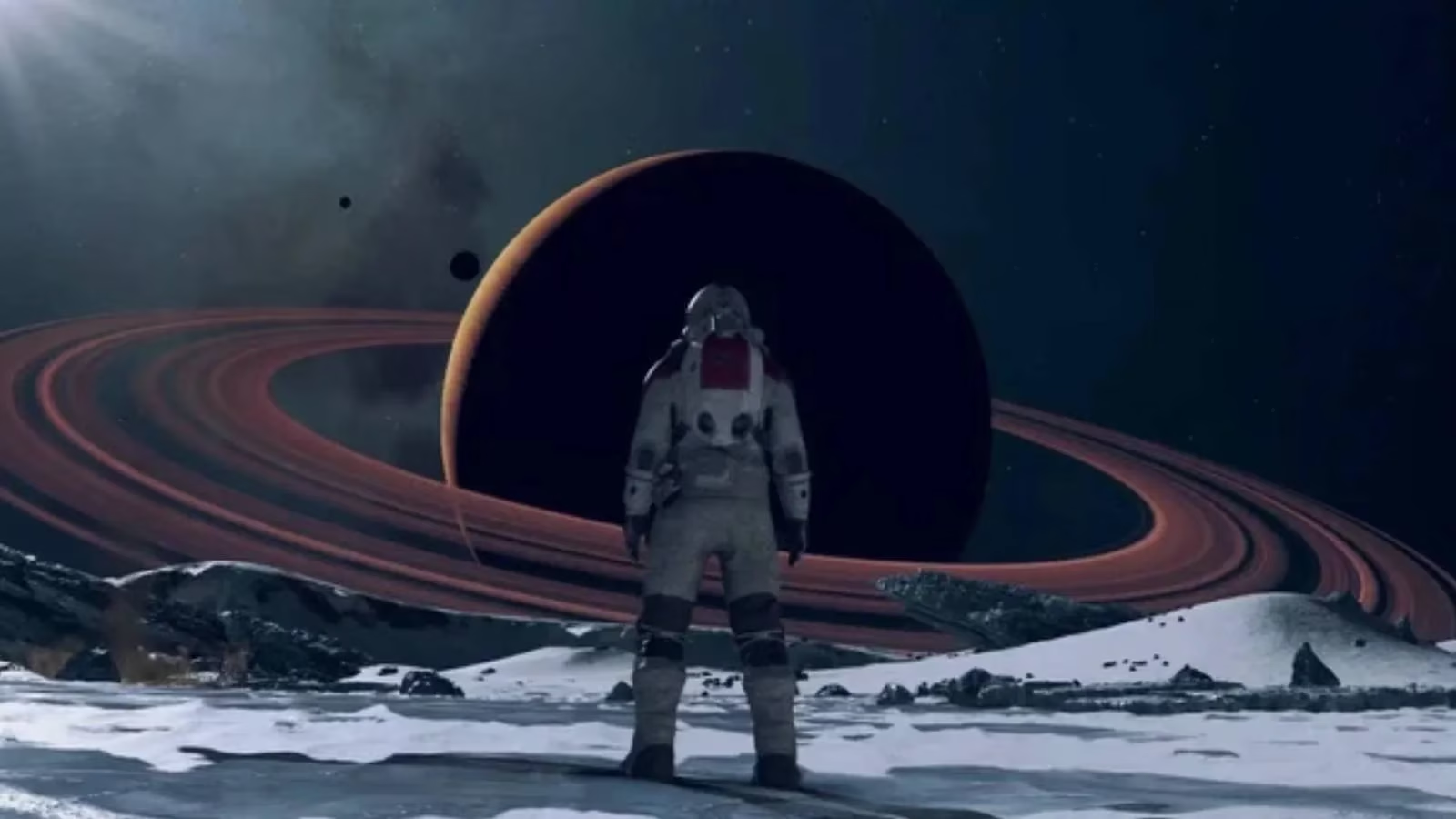
The Looming Shadow of The Outer Worlds 2 😰
The competitive landscape has shifted dramatically with the successful launch of The Outer Worlds 2 by Obsidian Entertainment. This sequel, born from a studio with a legendary and complicated history with Bethesda, now sits as a direct contemporary and competitor. The history between these two powerhouses is a tale etched in RPG lore: Obsidian's creation of the beloved Fallout: New Vegas under a Bethesda-published deal that famously hinged on a Metacritic score bonus they narrowly missed. That legacy of sharp writing, charming humor, and immersive world-building carried directly into the first The Outer Worlds, and its sequel has doubled down on that successful formula.
For Starfield, this creates a precarious situation. Both titles are open-world sci-fi RPGs vying for the attention and time of the same player base. A comparative look at their perceived strengths highlights the challenge:
| Feature | Starfield (Player Perception) | The Outer Worlds 2 (Player Perception) |
|---|---|---|
| World Scale | Vast, sometimes criticized as empty | More focused, densely packed with narrative |
| Writing & Humor | Varies, sometimes seen as sterile | Consistently praised for its sharp, witty dialogue |
| Post-Launch Support | Slow, uncertain roadmap | Strong launch momentum with clear communication |
| Legacy | Bethesda's new IP, carrying high expectations | Spiritual successor to New Vegas' narrative style |
The arrival of a well-received, narrative-heavy competitor like The Outer Worlds 2 has undoubtedly changed the calculus for Bethesda. Any new Starfield expansion must now not only satisfy existing fans but also stand out in a more crowded and critically scrutinized field.
Community Sentiment and the Road Ahead 🧭
Looking back, Starfield's launch was a paradox. Critical acclaim from reviews contrasted sharply with a segment of player feedback that found the universe beautiful yet barren, vast yet vaporous in places. The Shattered Space DLC, intended to deepen the lore, was met with a collective sigh for its short length and underwhelming story impact. The community's wishlist for the next chapter is clear and urgent:
-
A substantially longer and more impactful story campaign that introduces a new major faction or threat.
-
Meaningful expansion of core gameplay systems, like ship building, outpost management, and space exploration mechanics.
-
Addressing the "empty world" critique with more dynamic events, hand-crafted points of interest, and deeper interaction with existing factions.
-
Transparent and consistent communication about the long-term vision for the game.
Bethesda's last official word, a vague tweet from the Starfield account earlier in the year, promised "a lot of exciting things planned" but offered no specifics. In 2026, that kind of silence is riskier than ever. Players have options, and patience wears thin.
A Critical Juncture for Bethesda ⚖️
I believe Starfield stands at a critical juncture. The game possesses a phenomenal foundation—a stunning cosmic playground with robust mechanics. However, foundation alone isn't enough to sustain a live service-style RPG in the modern era. The successful launch and reception of The Outer Worlds 2 has proven there is a hungry audience for sci-fi RPGs with a strong, character-driven narrative voice.
For Starfield's next move to be successful, Bethesda must learn from the past year:
-
Scope and Depth: The next expansion must be expansive, both in geographical scope and narrative depth. It needs to be an event, not an afterthought.
-
Innovation, Not Just Iteration: It should introduce genuinely new gameplay loops or significantly evolve existing ones to create fresh reasons to return.
-
Embrace the Competition: Instead of seeing The Outer Worlds 2 as a threat, view it as a benchmark for narrative engagement and player satisfaction in the genre.
The potential for Starfield to stage a spectacular comeback is absolutely there. The universe is ripe for deeper stories, stranger discoveries, and more consequential choices. But potential needs execution. Bethesda's ambition was to create a galaxy for us to explore for a decade. In 2026, with a formidable competitor now sharing the same orbit, the next update isn't just another DLC—it's a vital course correction that will determine whether Starfield's journey continues to captivate or begins to drift into the void of forgotten potential. The stars are waiting, but so are the players, and their telescopes are now trained on two different horizons.