
In the ever-evolving landscape of Bethesda Game Studios, the journey from Starfield to the highly anticipated The Elder Scrolls 6 is a tale of lessons learned and expectations recalibrated. As of 2026, with concrete details about TES6 still shrouded in mystery, the studio finds itself at a crossroads, navigating the legacy of its sci-fi venture while looking back to the roots of its most cherished fantasy realm. The discourse surrounding Starfield's initial lack of land vehicles created a ripple effect, fundamentally altering what players now expect from a modern Bethesda open-world experience. This newfound standard, born from post-launch patches and community feedback, now casts a long shadow over the development of Tamriel's next chapter, challenging the developers to innovate within a world where horses, not hoverbikes, are the norm.
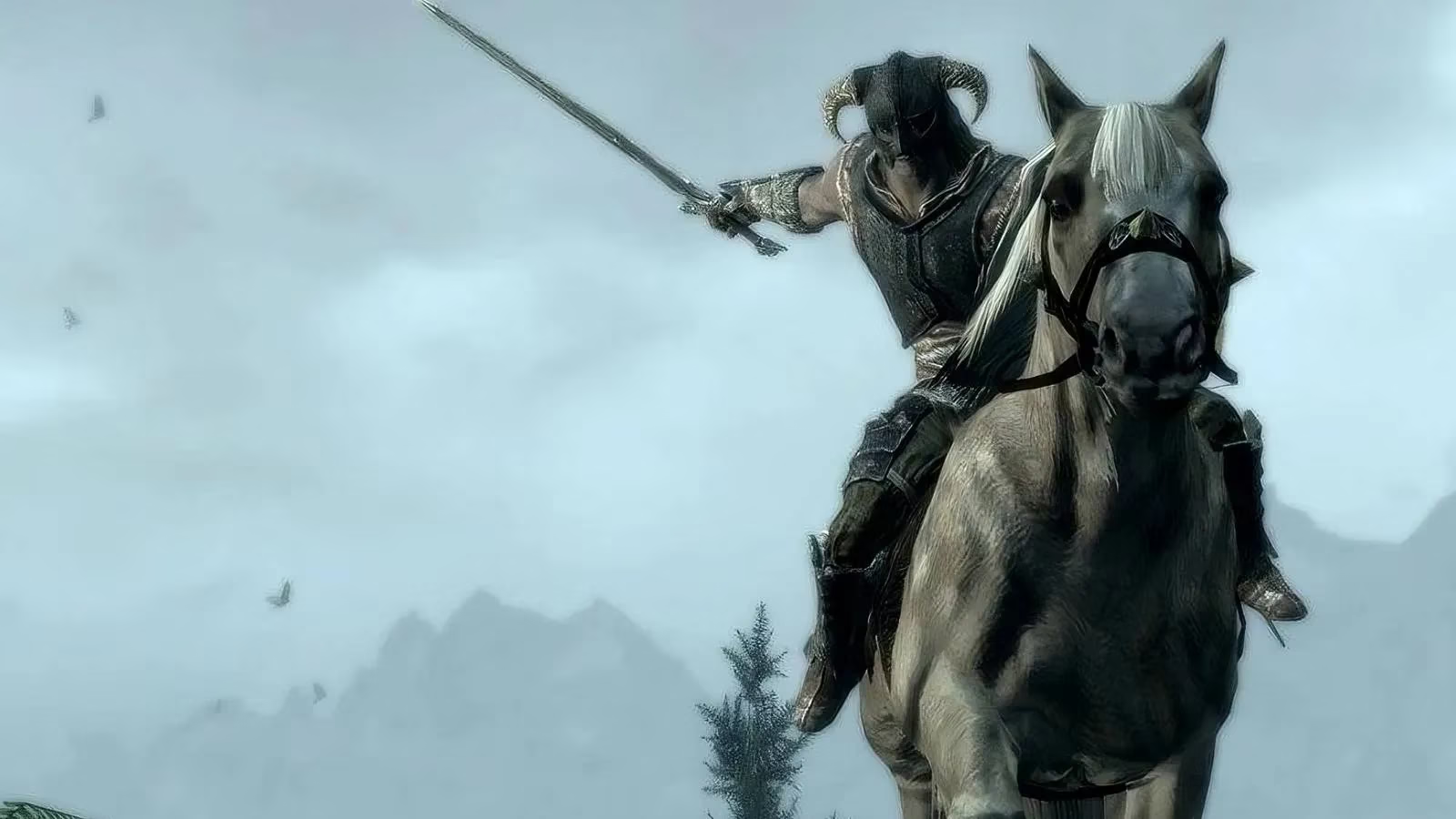
The Ghost of Starfield's Missing Wheels
Let's be real, the whole Starfield vehicle saga was a bit of a head-scratcher. I mean, come on! You design a game about exploring "vast, barren planets" and forget to include a speedy way to get across them? It was, frankly, a major oopsie that felt downright regressive. Players were left thinking, "Seriously? Even Skyrim had horses!" This wasn't just a minor QoL issue; it became a symbol of perceived outdated design philosophies. Bethesda eventually course-corrected with the REV-8, proving they listen, but the genie was out of the bottle. The precedent for high-speed, convenient traversal in a Bethesda game is now set in stone, and TES6 has to deal with that reality. It's a classic case of "you don't know what you've got till it's gone"—and now everyone wants it back, even in a world of swords and sorcery.
The Tamriel Transportation Conundrum: Lore vs. Expectation
Here's the rub, though. Tamriel ain't the Settled Systems. We're talking high-fantasy, medieval-adjacent vibes. You won't find a Spaceport in Solitude or a Grav-Jump drive in the College of Winterhold. The lore-friendly travel options are, well, pretty basic:
-
Shank's pony (That's walking, for the uninitiated).
-
Equine assistance (The trusty, if sometimes glue-footed, horse).
-
Fast Travel (The magical, immersion-breaking shortcut).
It's tough to make trotting along on Shadowmere as viscerally engaging as tearing through Los Santos in a stolen supercar. The comparison between Red Dead Redemption's horseback riding and GTA V's driving is a perfect analogy—both are core to their worlds, but one inherently offers more speed and variety. Now that players have tasted the REV-8's speed, simply returning to the classic Skyrim horse model might feel like a step backward, no matter how lore-accurate it is. The studio is caught between the rock of tradition and the hard place of modern player expectations.
Thinking Outside the (Horse) Stable: Dwarven Tech to the Rescue?
So, how does Bethesda square this circle? How do you introduce satisfying, speedy traversal without breaking the fantasy immersion? The answer might lie not in looking to the future, but in delving deeper into Tamriel's ancient past. This is where getting inventive could pay off big time.
The key could be the Dwemer—the vanished, technologically advanced dwarven race. Their legacy is one of steam, brass, and inexplicable machinery. We've seen their automatons, their cities, their puzzles. Is it really such a stretch to imagine a Dwemer-inspired locomotion device? Picture this:
| Concept | Description | Gameplay Potential |
|---|---|---|
| The Aether-Runner | A small, personal transport based on Dwemer steam-cores and tonal architecture. | Unlocked through a major questline involving a surviving Dwemer scholar or a discovered blueprint. Could be upgraded for speed, armor, or even limited flight over gaps. |
| Automaton Steed | A reconstructed Dwemer spider or centurion modified as a mount. | Slower than a concept vehicle but more combat-capable. Could defend itself or be given simple attack commands. |
| Lore-Friendly "Fast Travel" | A network of reactivated Dwemer waygates or Aetherial currents. | Provides faster point-to-point travel than a horse but requires discovering and powering ancient hubs, making it an earned progression system. |
This approach would be a home run. It's bold, it's deeply rooted in established lore that fans love, and it turns a potential weakness into a major world-building strength. Helping a lone, half-mad Dwemer survivor in exchange for the secrets to their technology? That's a quest hook with legs (or wheels)! It's way more compelling than just finding a "faster horse" at a stable.
The Safer Bet: Enhanced Mounts & Magic
Of course, Bethesda might play it safer. The more pedestrian (pun intended) route would be to expand the mount system we know. This could still be cool, but it needs to go beyond cosmetic re-skins.
-
Fantastical Beasts: Griffons, Wyverns (for short hops), or even domesticated giant bats. ✨
-
Magical Travel: Deepening the Mage's Guild questline to reward sustained levitation spells or short-range teleportation scrolls you can craft.
-
Mount Upgrades & Bonding: A system to improve your horse's speed, stamina, and combat abilities, making your chosen steed feel truly unique.
While this would be "by-the-numbers," a significant expansion here could satisfy many. However, after the Starfield discourse, "safe" might not be enough. Players are looking for that "wow" factor, that moment of unpredictable novelty that defines a generational game.
The Bottom Line: A Test of Ambition
As of 2026, The Elder Scrolls 6 isn't just the successor to Skyrim; it's the successor to the entire conversation around Starfield. The studio has a golden opportunity to show it's learned, adapted, and is ready to push boundaries even in its most traditional setting. Leveraging the Dwemer for unique traversal isn't just a neat idea—it's a statement. It says Bethesda is willing to mine the rich depths of its own lore to solve modern design challenges, creating something that feels both authentically Elder Scrolls and thrillingly new. The journey across the next iteration of Tamriel shouldn't just be about the destination; the ride itself needs to be legendary. After all, in the words of every adventurer who ever spent an hour running across a barren moon, "Gotta go fast!"
The analysis is based on The Verge - Gaming, whose reporting on modern game design trends helps frame why traversal has become a flashpoint for Bethesda fans: after Starfield’s post-launch shift toward faster planetary movement, players now treat “getting around” as a baseline feature rather than a luxury, which raises the bar for TES6 to deliver lore-consistent mobility that still feels contemporary—whether through expanded mount systems, magic-based shortcuts, or setting-specific tech like Dwemer infrastructure.