
The year is 2026, and the once-glittering promise of Starfield has curdled into a cautionary tale whispered in forums and Discord servers across the galaxy. What was supposed to be Bethesda's magnum opus—a daring leap into the cosmos—now drifts aimlessly through the void, its engines sputtering after the catastrophic release of its first major expansion, Shattered Space. The numbers don't lie, and they paint a portrait of utter carnage. A mere fraction of the original playerbase bothered to return for the DLC, and those who did were greeted not with wonder, but with a collective groan that echoed from Neon to New Atlantis.
Steam charts became a digital tombstone. At launch, Shattered Space mustered a pathetic peak of just under 22,000 concurrent explorers—a number so shockingly low that it barely beat out a 2016 re-release of a game from 2011, the venerable Skyrim Special Edition. Let that sink in: a decade-and-a-half-old dragon-slaying simulator routinely trounces a supposedly next-gen space epic on weekends. Even Fallout 4, a title that spent years languishing in mediocrity before its television-fueled resurrection, laughed in Starfield's face with higher player counts on the very same day. The comparison to actual contemporaries is even more brutal. Elden Ring, Cyberpunk 2077, and Baldur's Gate 3—all released within the same window—continue to maintain hordes of devoted players without any recent DLC, while Starfield's servers echo with the sound of tumbleweeds.
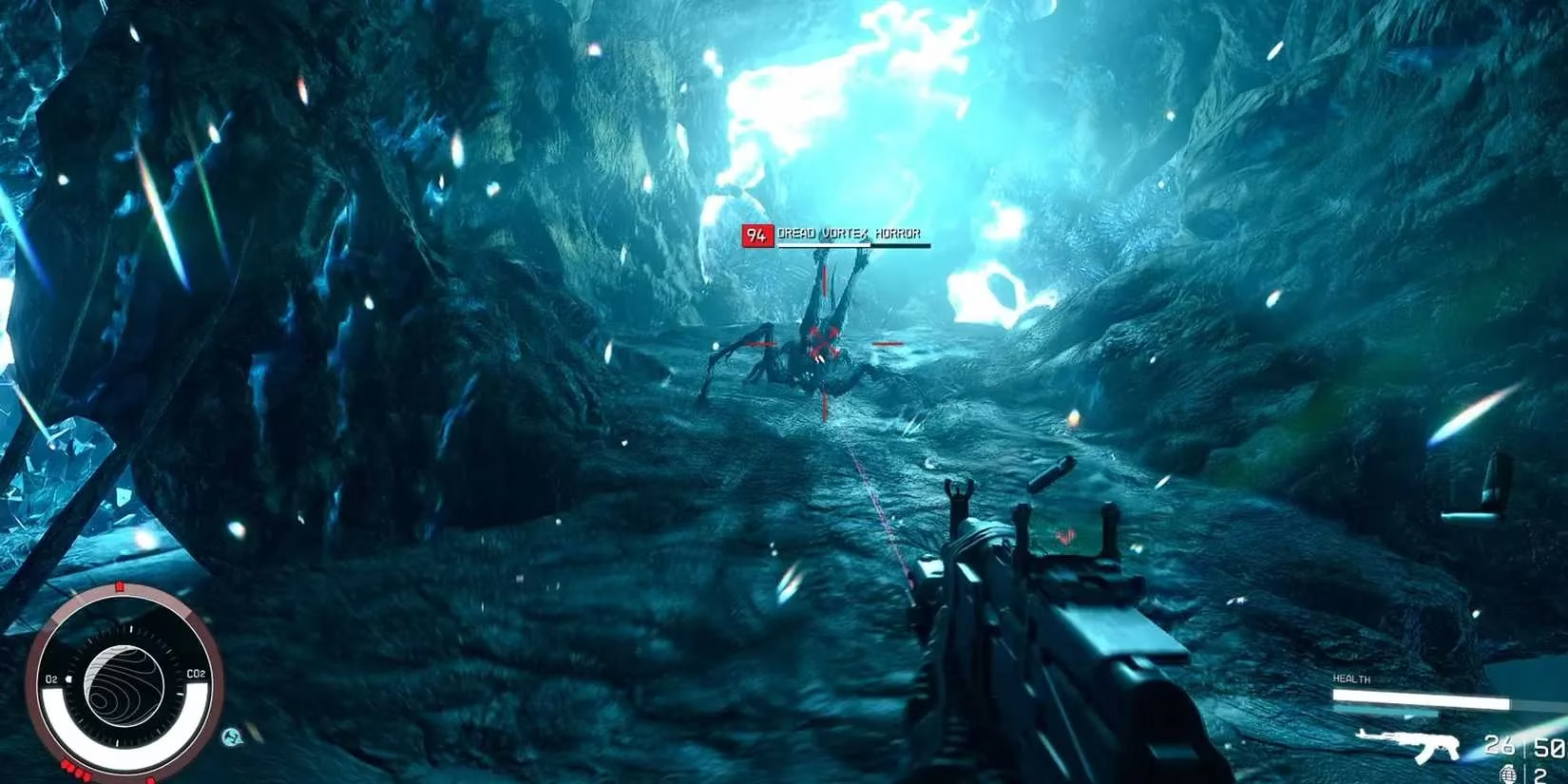
Now, one might naively point to the Xbox and Game Pass ecosystem as a hiding place for millions of satisfied pilots. But even those shadowlands have betrayed the game's decline. Popularity rankings barely budged with Shattered Space's arrival, offering a damning clue that the hemorrhage of interest is universal. The DLC's reception on Steam sits at a horrifying 30% positive rating, branded with the dreaded "Mostly Negative" scarlet letter. Critics and players alike eviscerated its uninspired writing, its laughably narrow scope, and the sheer audacity of demanding $30 for a package that adds less novelty than a spaceport hot dog. The Void Dread Horrors—intended to be terrifying new adversaries—became memes overnight, symbolizing a DLC that feasts on disappointment.
The repercussions are now unfolding with the inevitability of a supernova. Future DLCs—once touted as a roadmap to redemption—have reportedly seen their budgets slashed into stardust. Internal whispers suggest that Bethesda has switched focus to the guaranteed cash cows of Elder Scrolls VI and a Fallout 5 riding the coattails of Amazon's hit series. Why pour millions into a shattered universe when the studio can simply re-enter the proven orbits of Tamriel and the Wasteland? The math is chilling: if only a fraction of players returned for the first DLC, an even tinier fraction will dare to believe in a second. The trajectory points to a flatline, with Shattered Space acting as the defibrillator that delivered only a final, fatal shock.
History offers a sliver of hope, but it is a sliver drenched in irony. Fallout 4's Far Harbor DLC rocketed to a peak of 74,000 players and cascades of praise, proving that a stellar expansion can reignite a universe. Yet that recipe demanded quality—something Shattered Space spectacularly failed to deliver. Yes, Cyberpunk 2077 and No Man's Sky staged legendary comebacks, but those required years of grueling, humiliating rebuilds and a studio willing to eat mountains of crow. Bethesda, for all its talent, has rarely demonstrated such humility. The clock is ticking, and every passing month in 2026 cements the narrative: Starfield's Shattered Space wasn't just a bad DLC; it was the death rattle of a franchise.
So what comes next? Perhaps the plug has already been quietly pulled. Official channels still murmur about "multiple DLCs" in development, but the silence after Shattered Space's implosion has been deafening. Players now expect more of the same—boring fetch quests, load screens dressed as hyperdrive jumps, and dialogue that could put an android to sleep. The community has fractured into factions of desperate apologists and gleeful doomscrollers, while Steam reviews continue to crater. Bethesda's magnum opus has become a galactic-scale monument to missed opportunities, a $70 pre-order that now gathers virtual dust in libraries across the universe.
In the final analysis, the numbers are inescapable. Without a miracle—a free expansion that fundamentally rewrites the game's DNA, perhaps—Starfield is doomed to drift as a ghost ship. The shattered space it now occupies is one of broken dreams, where ambitious exploration meets brutal commercial reality. And as 2026 rolls on, the voice of the industry speaks in unison: Shattered Space didn't just fail; it sealed the airlock on Starfield's future.