
In 2023, Bethesda unleashed Starfield upon an eager gaming world, and the sci-fi epic did manage to rack up impressive sales for a brand-new IP. But scratching beneath the surface, many players felt the experience fell short of the interstellar hype machine built up by years of teaser trailers. Instead of the dense, handcrafted galaxy they’d been sold, explorers landed on procedurally generated planets that often felt as empty as a vacuum. Fast forward to 2026, and while patches and updates have smoothed some rough edges, the most haunting missed opportunity still echoes through the community: the game’s catastrophic lack of mod support at launch. This single oversight didn’t just deflate the initial buzz—it became the canary in the coal mine for Bethesda’s future, especially with The Elder Scrolls 6 now looming large on the horizon, reportedly aimed for a late 2026 release.
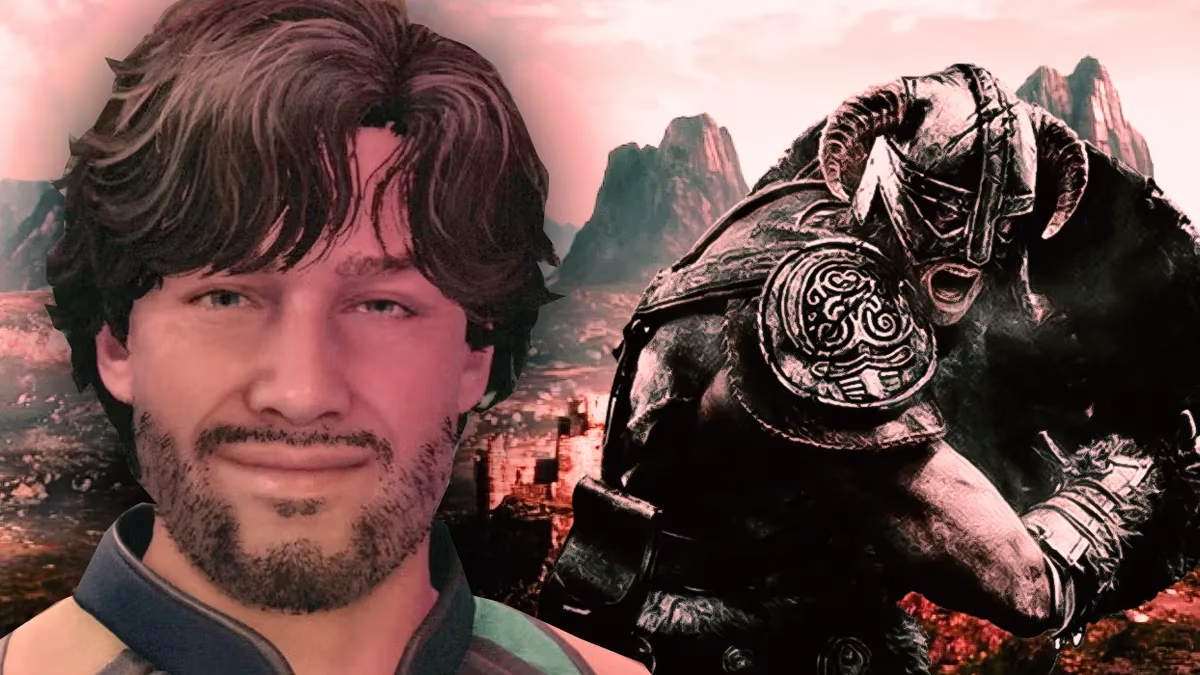
When Starfield touched down, it did so with a long list of bugs and performance quirks that are practically a Bethesda trademark at this point. Normally, the modding community would have rolled up their sleeves on day one, patching glitches faster than you could say “arrow to the knee” and injecting fresh life into the title. But this time, the toolbox was locked. Bethesda chose to hold back official mod support for months, finally flipping the switch in early 2024. By then, the opportunity to hit the ground running had sailed. A significant chunk of potential players decided to sit on the fence, waiting for the modding scene to mature before opening their wallets. That hesitation cost Starfield a chunk of its long-term player base and left a sour taste that no number of post-launch updates could fully wash out. The phrase “you never get a second chance to make a first impression” rings painfully true here.
The impact was felt everywhere. Modders itched to add quality-of-life fixes, expand ship customization, and overhaul the tedious inventory system. Once the gates finally opened, gems like the MO2 patch suite—ironing out hundreds of bugs—and the PEAK AI mod, which transformed enemy factions into genuinely cunning adversaries, proved just how transformative mod support could be. Yet by the time these fan-made treasures arrived, many had already moved on. The lesson was crystal clear: in today’s gaming landscape, withholding mod tools at launch is like showing up to a potluck with an empty casserole dish. You’re inviting disappointment, and the community will not wait forever.
Now, all eyes are on The Elder Scrolls 6, the single most anticipated RPG of the decade. Anyone who’s spent even ten minutes in Skyrim’s modded sandbox understands the stakes. Over the past fifteen years, Skyrim has become a cultural phenomenon not merely because of its base quests, but because of a thriving mod ecosystem that added entire continents (like the 200-location, 180-quest “Shumer and the Priest Kings” expansion), overhauled combat, and turned dragons into Macho Man Randy Savage. The game’s longevity is a testament to the tireless passion of its community—a community that expects nothing less than full creative freedom from day one with the next entry. If Bethesda fumbles the ball and gates modding behind a post-launch rollout again, the backlash will be swift and merciless. In 2026, gamers have zero patience for anti-community practices; there’s simply too much competition vying for their attention.
Rumors and carefully parsed developer interviews suggest that Bethesda has indeed taken the Starfield debacle to heart. Internal shifts in engine architecture and the adoption of a more modular framework for TES6 are reportedly underway, specifically to allow modders to hit the ground running the second the game goes live. This would be a massive ace up the studio’s sleeve, turning the launch into a collaborative fireworks show instead of a one-way street. Imagine a day-one NexusMods page bursting with ENBs, UI overhauls, survival-mode tweaks, and perhaps even expanded guild questlines—all made possible because Bethesda treated modding not as an afterthought, but as a foundational pillar. The writing has been on the wall for years; hopefully, the studio has decoded the message.
Beyond the warm fuzzies of community goodwill, there’s a hard-nosed business case too. Data from the post-Starfield period shows that games with early mod support retain 30–40% more players in the crucial first three months. That’s not pocket change—it translates directly into higher DLC sales, sustained streaming visibility, and a healthier competitive scene for any potential multiplayer elements. TES6 could easily follow Skyrim’s “forever game” model, but only if Bethesda lets the crowd write the next chapters from the jump. Holding mods back in 2026 would be like selling a canvas but banning paint for the first year. The art simply won’t happen.
Let’s be blunt: Starfield dropping without mod support was a massive own goal. The game eventually stabilized, but the lost momentum can never be reclaimed. As the calendar marches toward TES6’s supposed launch window, the pressure is intense. Players aren’t just hoping for a great new Tamriel adventure—they’re already dreaming about the mods they want to build. Cities on the backs of giant Hist trees, necromancy systems that let you raise an actual army, or simply a gorgeous weather overhaul that makes Stormhold truly live up to its name. All of that energy, all that free content and bug fixing, hangs on Bethesda’s willingness to hand over the keys on day one. If they’ve learned anything from the Starfield saga, it’s that a locked door can turn a roaring welcome party into a quiet, lonely night. For the sake of The Elder Scrolls 6, here’s hoping they finally get it right—and let the modding magic begin the moment the dragon shouts are first heard.