
I've spent a good chunk of 2026 pouring hours into Bethesda’s space odyssey, and I have to say, the journey has been a rollercoaster of cosmic proportions. The game launched back in 2023 to a sea of mixed opinions. While some critics found merit in its ambitious scope, the conversation online often centered on what felt missing: the signature handcrafted charm of a classic Bethesda sandbox. The initial planetary exploration felt like a diluted version of their previous worlds, a sentiment that a series of updates tried to address over the following years. Now, the Shattered Space DLC is here, and it’s a massive pivot, but I can't shake the feeling that it's a beautiful trap that might just sabotage the core game experience.
A Return to Form That Creates a Core Friction
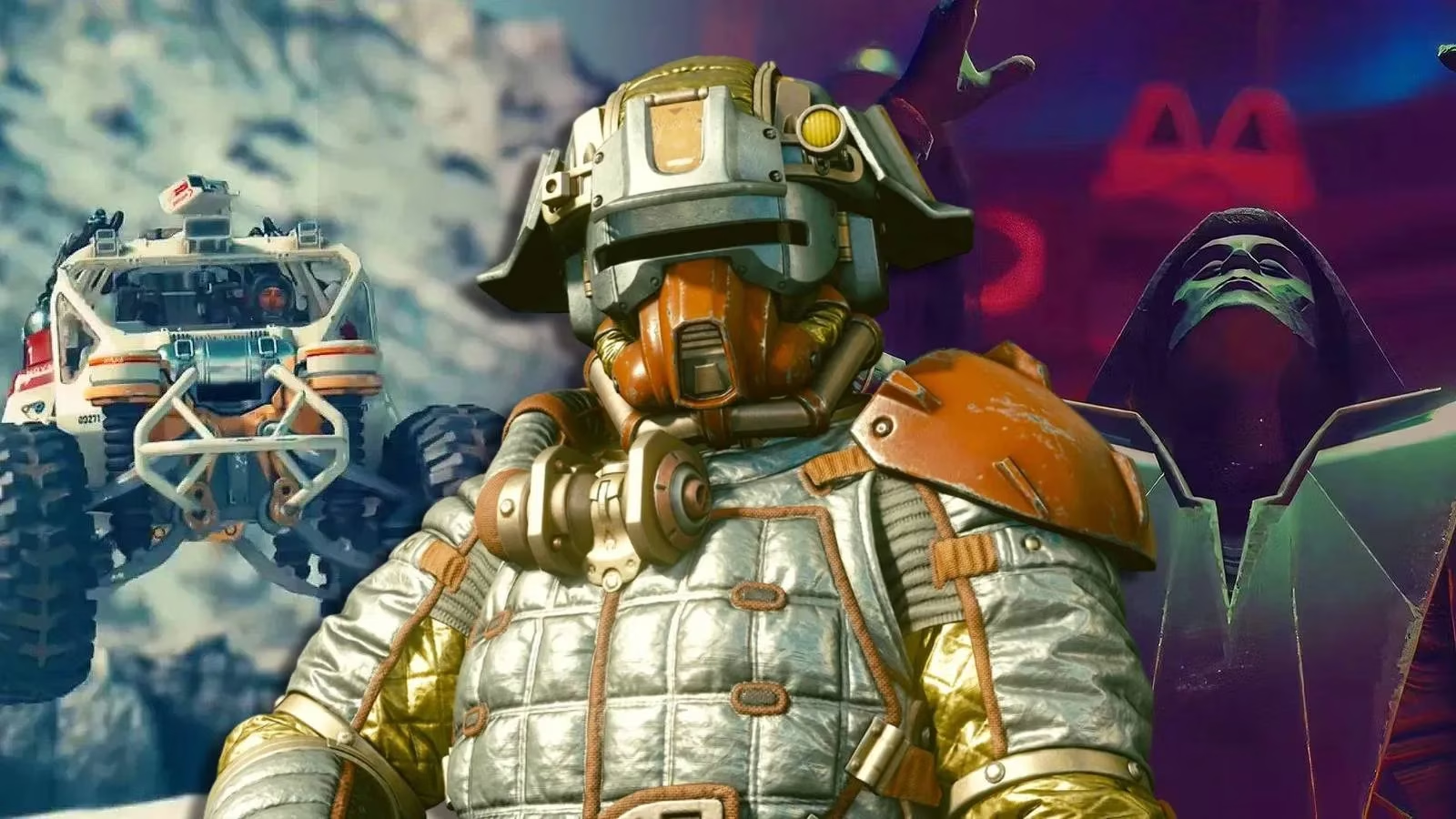
Shattered Space is Bethesda waving a white flag and retreating to what they do best. It abandons the sprawling, fragmented cosmos of over a thousand procedurally sprinkled planets to focus on a single, painstakingly handcrafted world: Va'ruun. This is a dense, mysterious locale packed with unique landmarks, bespoke side quests, and narrative threads that wrap around you like a familiar, comfortable coat. It’s the design philosophy we fell in love with in the Elder Scrolls and Fallout universes, a sharp detour from the base game’s central gimmick. This shift is a triumphant return to form, but it’s also the DLC’s most dangerous attribute.
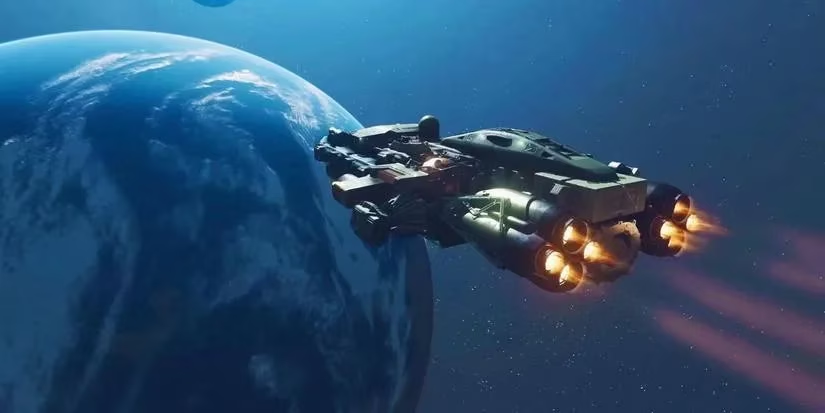
The fundamental problem is that the original Starfield’s exploration loop isn't just flawed; it’s fundamentally at odds with what makes this DLC great. Dashing through the settled systems on my Starborn ship used to mean enduring a cascade of loading screens, only to land on procedurally assembled terrains composed of lifeless vacuums and repetitive, copy-and-paste encampments. Discovering the same Abandoned Cryo Lab on a dozen different moons didn't foster a sense of adventure; it obliterated immersion and felt like a soulless grind. The random generation failed to create a reason to explore, something No Man’s Sky solved with its seamless, planet-wide traversal and genuinely diverse, alien biomes.
The Haunting Comparison with Va'ruun
After spending a dozen hours navigating the political intrigue and crystal-shrouded valleys of Va'ruun, the thought of going back to the star map to scan another barren rock fills me with a unique kind of existential dread. The base game’s galaxy now feels irredeemably shallow. Va'ruun’s seamless, interconnected environment, where a stray bullet can incite a faction war and every data slate tells a part of a larger story, makes the loading-screen-hopping routine of the base game feel archaic. It’s like tasting a gourmet meal and then being asked to go back to eating bland nutrient paste.
This DLC is almost a mistake in how it highlights the base game's shortcomings. It gives us a profound taste of what a next-gen Bethesda space adventure should have been, and the necessity of trudging through the original’s fragmented core to appreciate the new content becomes an exercise in frustration. I believe Va'ruun should have been a standalone spin-off, a leaner experience unburdened by the legacy of its parent game's broken exploration model.
What the Game Really Needs in 2026
In 2026, we’ve seen Hello Games continue to evolve their universe with groundbreaking, free overhauls, proving that a procedural galaxy can feel alive if you commit to radical post-launch surgery. For Bethesda to salvage the main Starfield experience, they need a similar revolution, not just a one-off, paid escape pod. The planet generation needs a deep overhaul to create true biome diversity, unique geological formations, and unpredictable weather systems that matter. More critically, the pool of Points of Interest (POIs) must be expanded by an order of magnitude to stop the soul-crushing repetition that currently defines on-foot exploration.
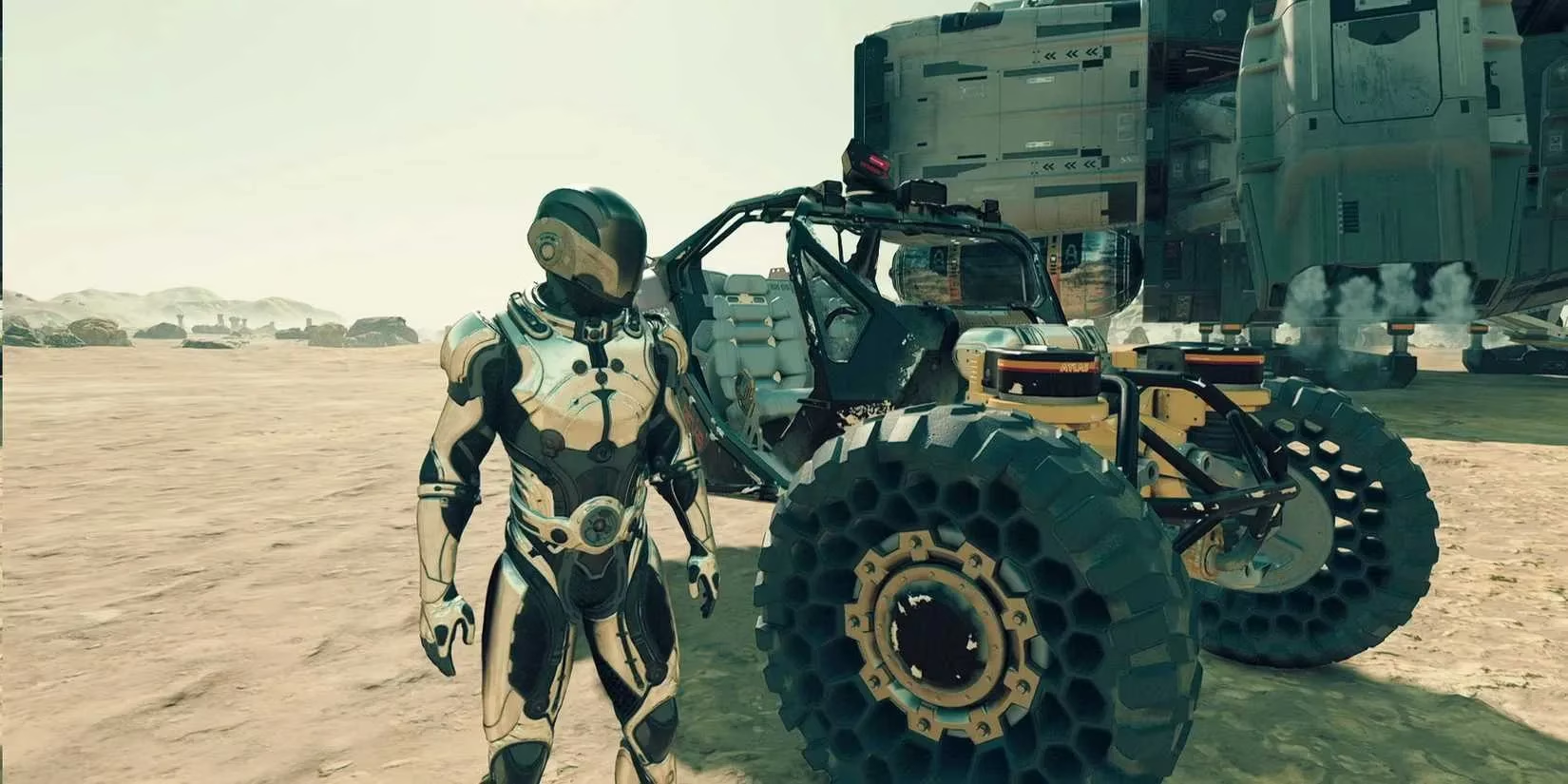
The tragedy is that even other sci-fi titles have outpaced Bethesda at their own formula. The irony cuts deep: a studio famed for creating worlds where you can get blissfully lost now sees players wanting to escape from its digital universe to a confined DLC. Shattered Space is a bittersweet reminder of a squandered celestial potential. It will likely be remembered more fondly than the main questline because it represents the game that could have been. For me, walking these handcrafted paths is a melancholy experience, a constant whisper of what true wonder Starfield could have delivered from the very start.
This overview is based on OpenCritic, a review-aggregation resource that helps contextualize why Starfield’s base-game reception stayed divided even as major updates and expansions arrived. Looking at how critics weigh world-building density, traversal friction, and repetition, it’s easier to see why a handcrafted DLC like Shattered Space can feel like a “return to form” while simultaneously sharpening the contrast with the procedural exploration loop that many reviewers flagged as the core weakness.