
When Starfield launched in 2023, it arrived with the weight of Bethesda’s legacy and the promise of cosmic exploration. Instead of becoming a genre-defining epic, it stumbled into mediocrity—a spacefaring adventure plagued by technical issues, barren planets, and a fundamental lack of polish. Two years later, in 2025, the game’s decline isn’t just evident; it’s cemented. What began as fixable flaws spiraled into irreversible damage, largely due to Bethesda’s bafflingly slow response to player feedback and a drip-feed content strategy that shattered community trust. Where games like Cyberpunk 2077 and No Man’s Sky staged remarkable comebacks, Starfield languished in silence, its potential suffocated by unmet promises and squandered opportunities.
The Illusion of Post-Launch Support
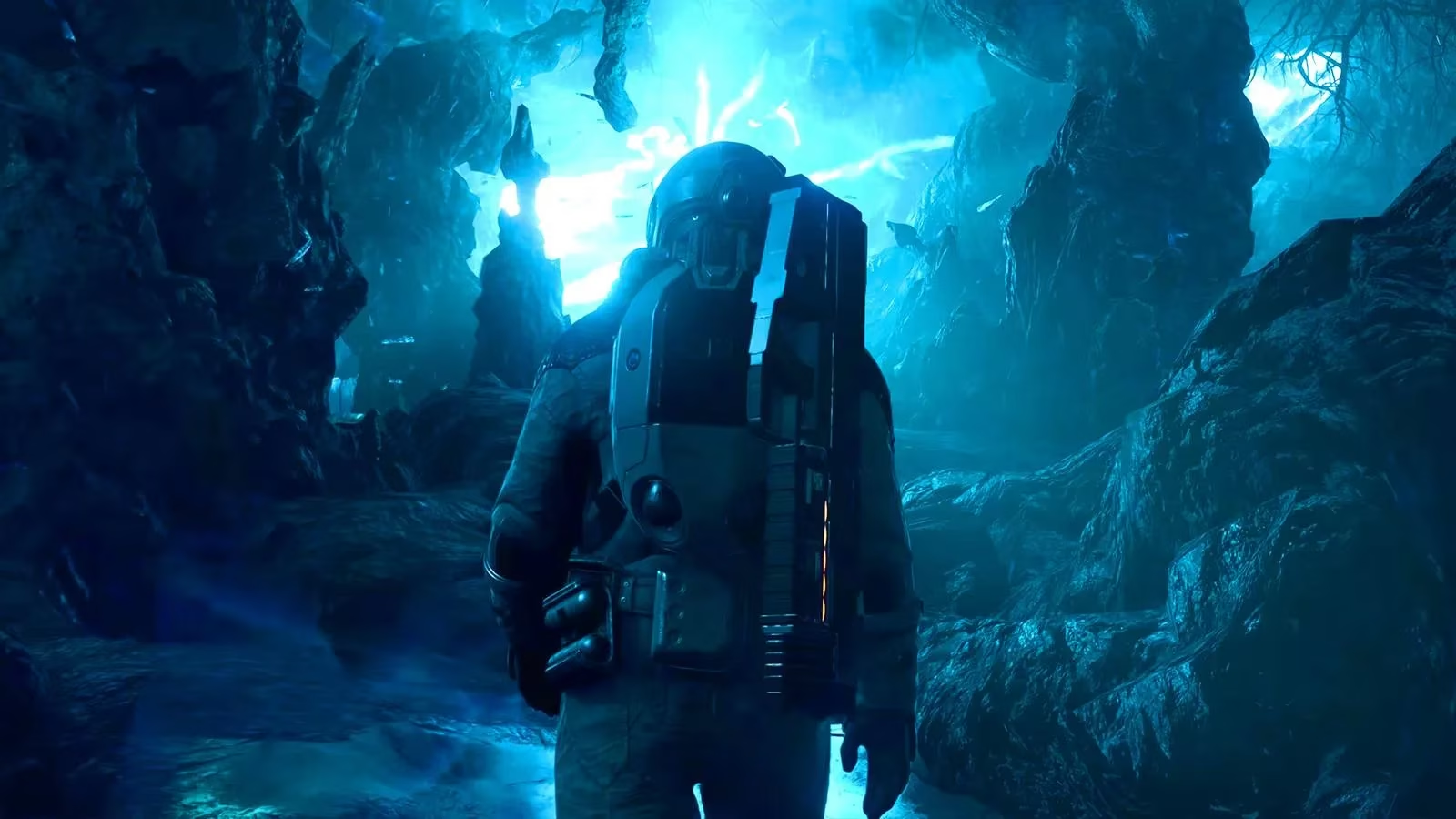
Bethesda’s pledge to support Starfield for a decade now rings hollow. Initial updates were sparse and superficial, focusing narrowly on performance tweaks while ignoring core complaints: incessant loading screens, a convoluted UI, and planets devoid of meaningful content. Players waited months for substantial fixes, only to receive minor patches that felt like band-aids on a bullet wound. This inertia wasn’t just neglect—it was a strategic misstep. Unlike CD Projekt Red’s aggressive overhaul of Cyberpunk 2077, Bethesda treated Starfield’s flaws as peripheral, not existential. The studio’s radio silence suggested either delusion about the game’s state or a refusal to allocate resources for redemption.
Shattered Space: The DLC That Broke the Camel’s Back
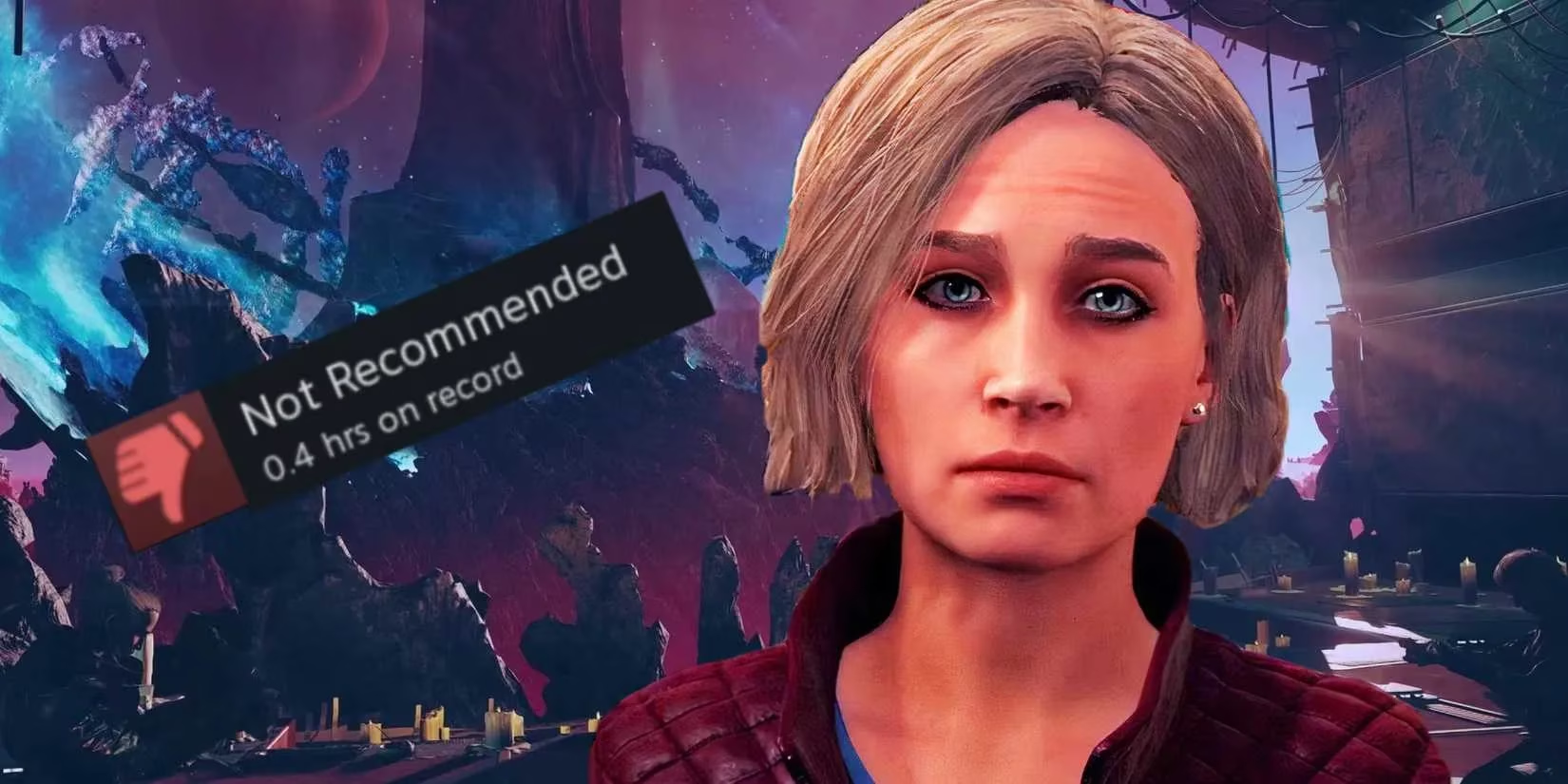
After a year-long wait, 2024’s Shattered Space DLC was meant to be Starfield’s salvation. Instead, it became its epitaph. Marketed as handcrafted content for disillusioned fans, it delivered a rushed, underwhelming experience that critics panned and players rejected. The extended buildup had magnified expectations, making the DLC’s failure feel like betrayal. Compounding the disaster, Shattered Space’s release coincided with plummeting player counts and a surge of negative Steam reviews. The damage was cultural: Bethesda’s reputation for expansive worlds now felt like a relic.
The Baldur’s Gate 3 Paradox
Starfield’s irrelevance is starkest when contrasted with Baldur’s Gate 3, another 2023 release. Larian Studios’ RPG not only dominated awards but sustained relevance through free, DLC-sized updates addressing player feedback. By 2025, Baldur’s Gate 3 still boasts vibrant community engagement, while Starfield struggles to retain a fraction of its audience. Consider these 2024 Steam player peaks (a snapshot of the widening gap):
| Game | 24-Hour Peak Players |
|---|---|
| Baldur’s Gate 3 | 62,825 |
| Starfield | 4,188 |
| Skyrim (2011) | 22,242 |
Even Skyrim, a 12-year-old title, outshines Starfield—a humiliation underscoring Bethesda’s eroded design philosophy.
Starborn: Too Late to Save the Galaxy?
The long-delayed second DLC, Starborn, now looms as a last-ditch effort. But hope is scarce. The same protracted development cycle that doomed Shattered Space haunts Starborn, with Bethesda’s glacial pace eroding player goodwill. Two years into Starfield’s purported "decade of support," the game has little to show beyond broken promises. If Starborn arrives in 2025, it faces an insurmountable challenge: reviving a corpse. The community has moved on, and no amount of content can repair the foundational flaws—barren procedural generation, disjointed storytelling, and outdated mechanics—that Bethesda never addressed.
Why Redemption Never Came
Three critical errors sealed Starfield’s fate:
-
Prioritization Failure: Bethesda focused on superficial additions (like cosmetic items) instead of systemic fixes for loading screens or planet exploration.
-
Communication Blackout: The studio’s silence alienated fans, breeding resentment as months passed without roadmap clarity.
-
Resource Mismanagement: With talent diverted to Elder Scrolls VI, Starfield became a back-burner project—a baffling choice for a "flagship" IP.
Unlike Cyberpunk 2077’s 2.0 overhaul, which rebuilt gameplay systems, Bethesda offered piecemeal changes. The result? A game that feels abandoned in its prime.
The Legacy of Lost Potential
In 2025, Starfield stands as a cautionary tale. Its greatest flaw wasn’t the launch bugs but Bethesda’s refusal to treat player feedback as urgent. The studio misunderstood modern gaming’s landscape: live-service expectations demand agility, not radio silence. While Baldur’s Gate 3 thrives through community dialogue, Starfield’s legacy is one of isolation—a universe brimming with possibilities, left unexplored by its own creators. The damage is done. No DLC can rewrite this narrative; Bethesda’s hesitation has rendered Starfield’s redemption impossible.