
As Starfield approaches its second anniversary in late 2025, Bethesda's ambitious space RPG faces mounting skepticism about its ability to overcome fundamental design flaws. Despite initial hype surrounding its interstellar exploration premise, the game has weathered a storm of controversies: a notoriously bug-riddled launch, disappointing Shattered Space DLC, and prolonged content droughts between updates. While Bethesda promises more patches later this year, many players question whether incremental fixes can address the game's deeply rooted issues. 😞
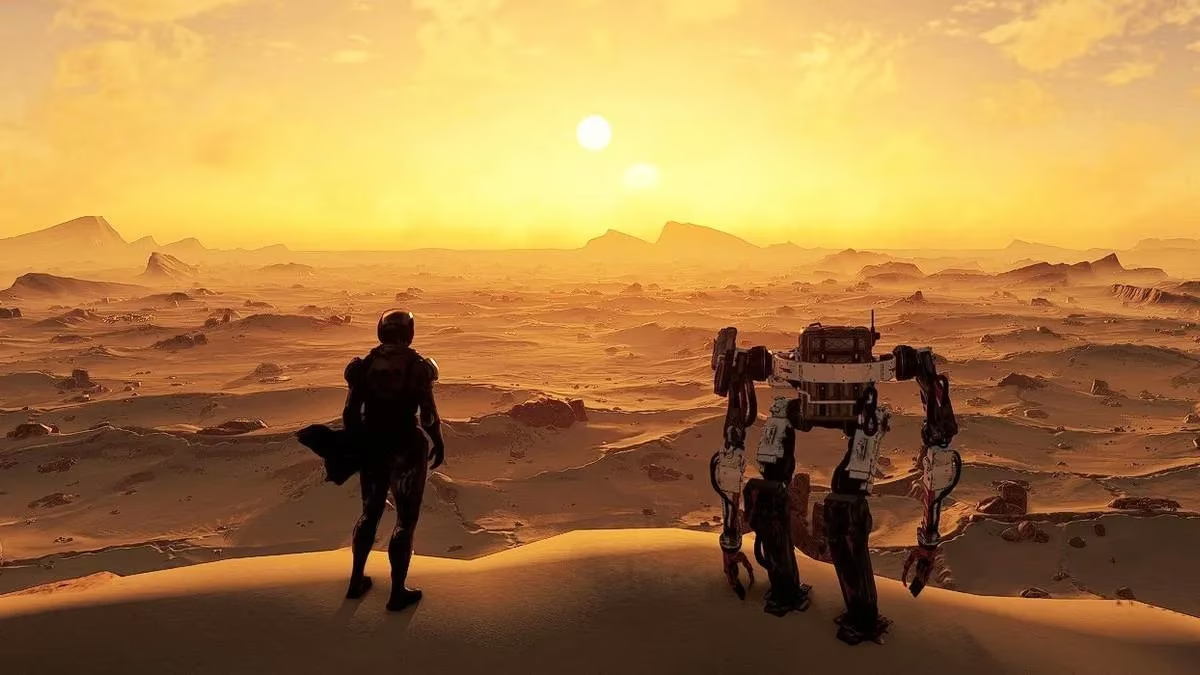
Technical Nightmares and Partial Recovery
The game's 2023 launch became infamous for game-breaking technical issues. Players reported falling through terrain in major hubs like New Atlantis, suffering catastrophic physics glitches, and struggling with inconsistent performance across platforms. One player described reloading saves for hours after character injuries caused by environment bugs. While subsequent patches have stabilized performance and reduced crashes significantly, these fixes merely addressed surface-level problems.
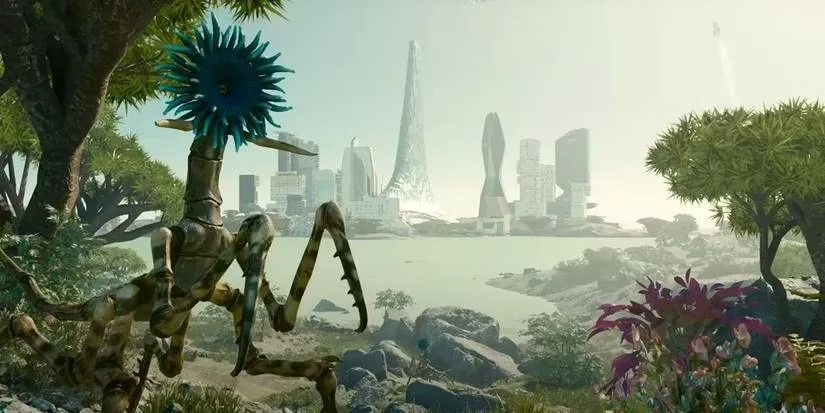
Core Gameplay: A Galaxy-Sized Disappointment
Beneath technical issues lie deeper structural flaws:
🔹 Barren Exploration: Procedurally generated planets frequently feature:
-
Repeated cookie-cutter outposts
-
Vast empty landscapes separating points of interest
-
Uninspired resource collection mechanics
🔹 Shallow Gameplay Loops: Players cite:
| Element | Criticism |
|---|---|
| Combat | Repetitive enemy encounters |
| Storylines | Predictable narratives |
| Player choices | Minimal lasting impact |
| Base-building | Tedious with limited payoff |
🔹 Space Travel Paradox: The anticipated space exploration actively discourages organic travel through:
-
Mandatory fast-travel systems
-
Excessive loading screens between locations
-
No meaningful planetary flight mechanics
The Impossible Redemption Arc?
Bethesda's history suggests possible recovery—Fallout 76 transformed from disaster to respected RPG through years of updates. Similarly, No Man's Sky executed a legendary turnaround post-launch. However, crucial differences exist:
No Man's Sky Recovery Formula:

1. Retained engaging core loop (resource gathering → ship upgrades → exploration)

2. Added features enhancing existing framework (bases, multiplayer, vehicles)

3. Maintained seamless planetary transitions

Starfield's Hurdles:

• Combat lacks visceral impact

• Procedural generation creates sterile worlds

• Engine limitations prevent true spaceflight
Industry analysts argue these aren't patch-fixable issues but foundational design choices requiring engine overhauls. The Shattered Space DLC's failure to meaningfully innovate exemplifies this limitation—it added content without addressing systemic weaknesses.
Future Prospects: Glimmers in the Void?
Recent leaks suggest Bethesda may finally implement interplanetary travel mechanics, potentially allowing manual ship navigation between celestial bodies. While likely still incorporating loading screens, this could significantly enhance immersion if executed well. 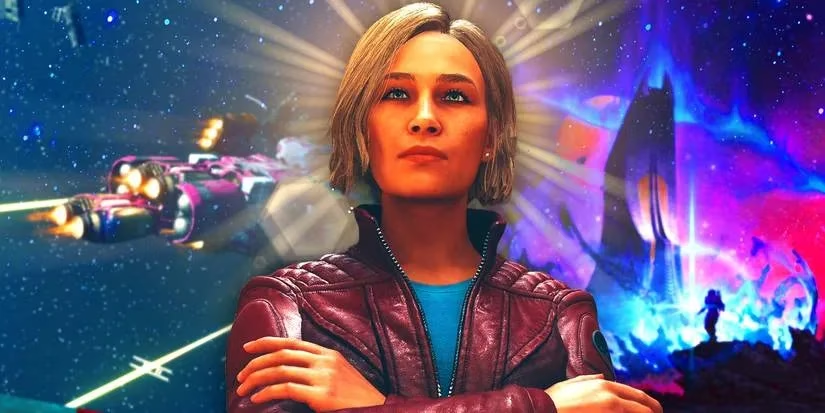
Yet skepticism remains high regarding Starfield's long-term viability:
-
💸 Sequel Uncertainty: The game's commercial underperformance makes a sequel unlikely as Bethesda prioritizes safer franchises like The Elder Scrolls VI
-
🧩 Technical Debt: Core engine limitations may prevent meaningful spaceflight implementation
-
⏳ Player Trust: Community patience wears thin after multiple underwhelming updates
Verdict: Lessons for the Cosmos
Starfield represents a cautionary tale about over-reliance on procedural generation and fast-travel convenience at the expense of immersive exploration. While upcoming updates may improve specific aspects—perhaps making it a \u201cgood enough\u201d experience—its fundamental identity as a shallow RPG with disjointed space mechanics appears irreparable. The greatest value in Starfield may ultimately be as a blueprint for Bethesda to build a truly revolutionary successor... should they ever venture back into the cosmos. 🌌