
Starfield's post-launch universe in 2026 still has a Starborn-shaped hole in it. Bethesda once filed a trademark for Starborn, a title that practically screamed major expansion after Shattered Space. For lore-hungry players, that was like finding a mysterious artifact in a cereal box. For skeptics, it was like watching someone promise to explain the meaning of life during a lunch break. And really, what could possibly go wrong when a studio tries to explain the literal origins of the universe? Only everything. 🌌
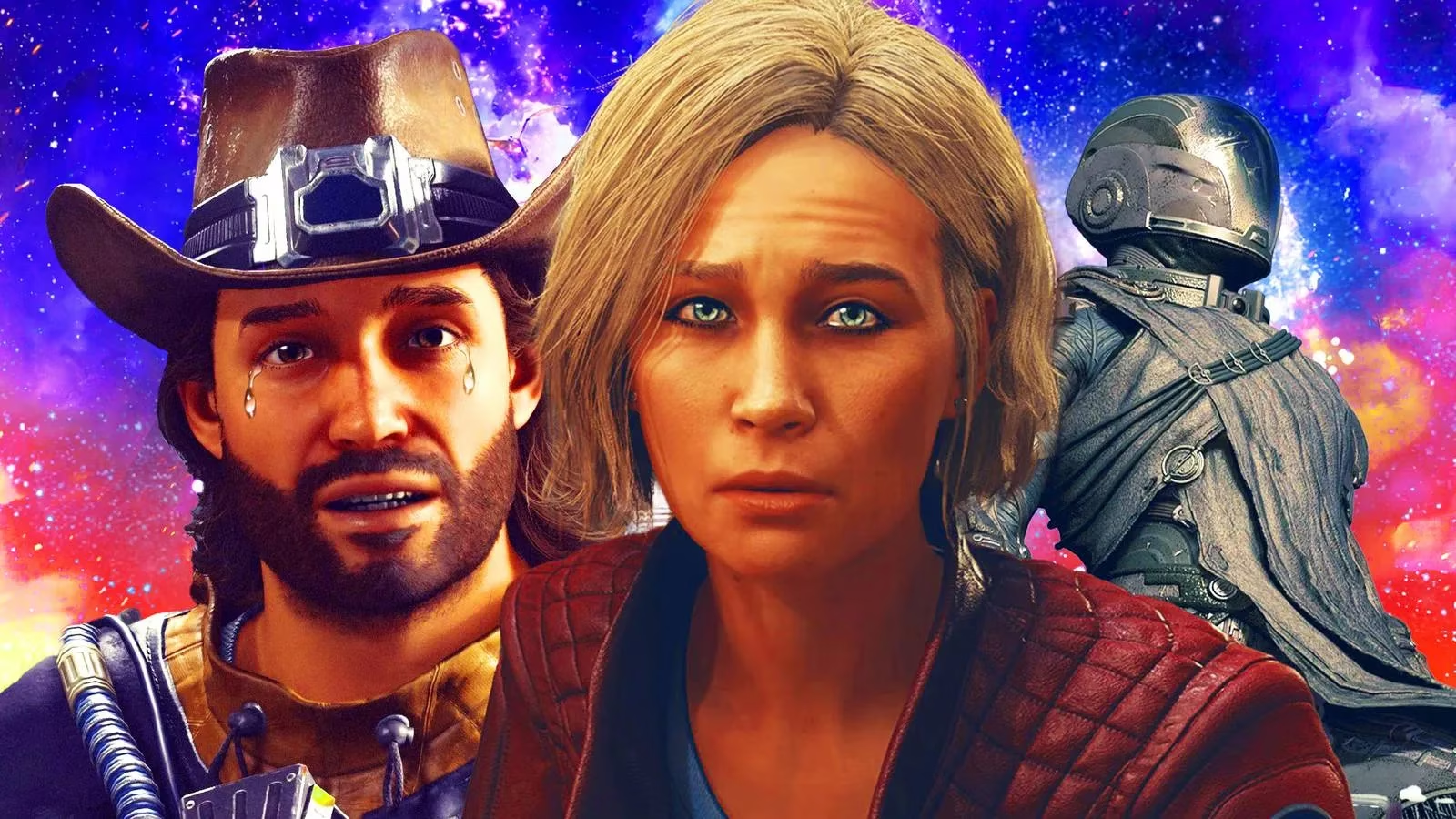
To be fair, the Starborn are not just another faction with cool armor and a bad attitude. They are interdimensional beings at the center of Starfield's main narrative. Every Starborn was once human, but those humans collected all the Artifacts and built the Armillary. That machine opens the way to Unity, a portal to another dimension. It is Starfield's version of New Game Plus, loosely inspired by string theory, where reality is made of vibrating strings and tiny dimensions. At the end of the main story, players face a final battle against a host of Starborn. They can side with the Hunter or the Emissary—who is actually Keeper Aquilus—or go it alone. Then the mission resets, and multiple dimensions open up. After that, the Starborn remain largely mysterious. Is that a flaw? Or is it the point?
Compare this to The Elder Scrolls V: Dragonborn. That expansion introduced Miraak, the first Dragonborn, a rebellious dragon priest who could absorb dragon souls just like the player. Arrogant, rash, and about as subtle as a shout in a library, Miraak was a prototypical bad guy and a memorable final boss. Dragonborn worked for Skyrim. It fleshed out the lore, delivered a satisfying conflict, and gave players a worthy opponent. But should Bethesda repeat that trick for Starfield? Probably not. The parallels are obvious: a special hero with unique powers, a world that is often unaccommodating, and a title ending in born. Yet Starfield's universe cannot be as simple as Skyrim's fantasy playground. If Bethesda introduces a stereotypical first Starborn as the ultimate evil, it risks reducing a multidimensional mystery to a hero's journey with a jetpack. That would be like explaining a joke until it files a restraining order.
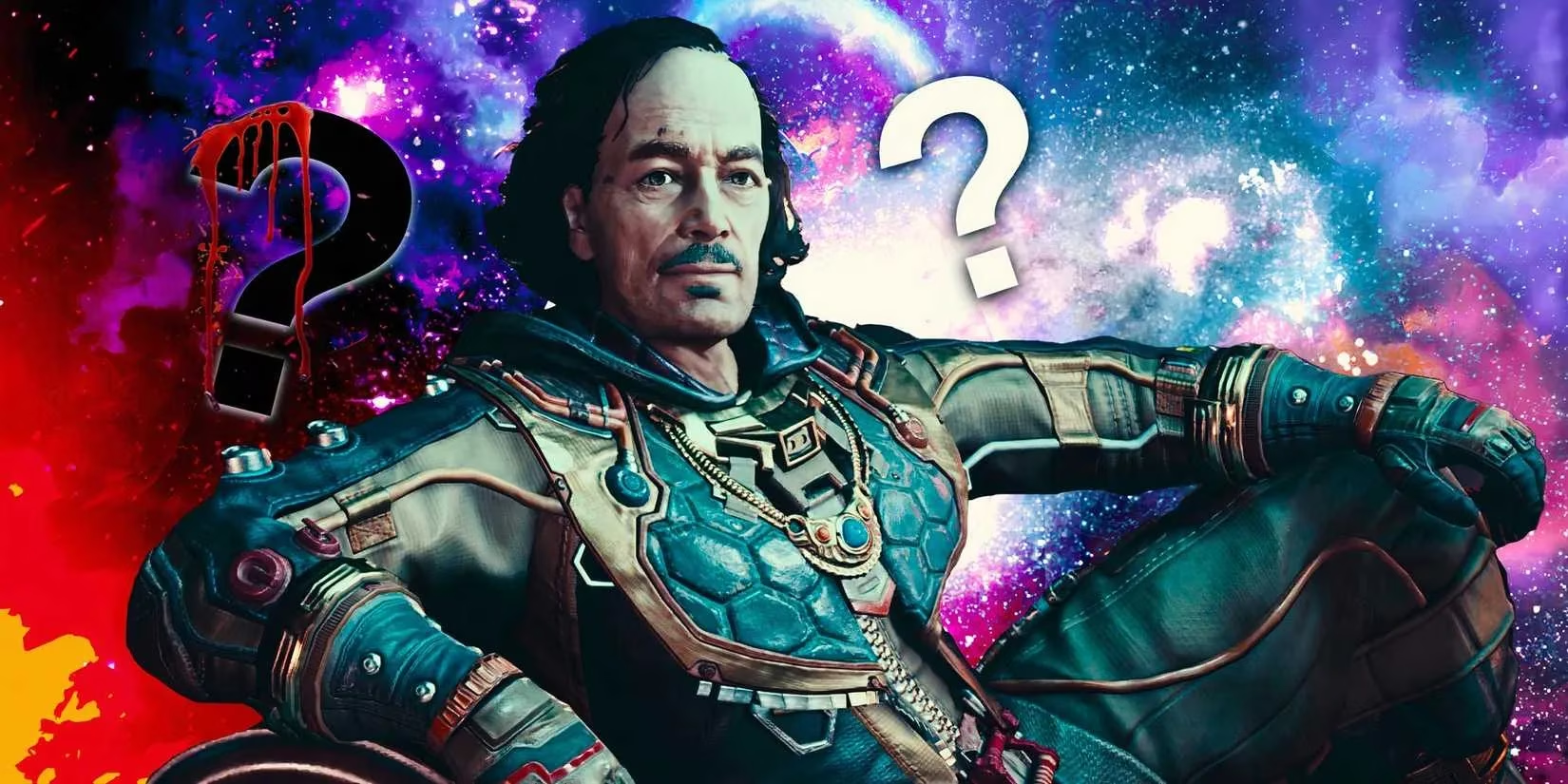
The real problem is that a Starborn DLC would have to explain the origins of the universe. That is not small talk. Even the best science fiction novelists and physicists have struggled with that one. If the answer is too simple, the entire universe becomes good versus evil, with the player as the chosen one who must beat the biggest bad. If the answer is too complex, players get a theological lecture about the origins of life, planets, and mankind—complete with a PowerPoint presentation about string theory. Nobody wants cosmic homework. Bethesda would need to balance fun and philosophy, spectacle and sense. That is a hard needle to thread, especially when the needle is also a portal to another dimension.
Bethesda is not the quirky little studio that made fascinating open-world games with weird side quests and memorable characters. In 2026, it is a behemoth owned by one of the biggest corporations in the world. It employs hundreds of people. Its games have always been buggy and slow to update, but now the excuses feel thinner than a space suit. That does not mean Bethesda cannot deliver. It means expectations are complicated. Fans still love Skyrim. Many still love Starfield, warts and all. The ending may have let them down, and the additional content may have underwhelmed them, but the potential is still there. The question is whether Bethesda can turn that potential into something that feels worthy of the mystery.
Here is a simple table of possible paths and their risks:
| Approach | Risk | Better Path |
|---|---|---|
| Reveal the first Starborn as a classic villain | Turns cosmic mystery into a boss fight | Make Starborn reflections of player choices |
| Explain Unity with hard science | Feels like a lecture | Use environmental storytelling and character drama |
| Answer every question | Kills imagination | Leave some gaps for players to fill |
| Introduce a Miraak-like antagonist | Repeats Skyrim's formula | Explore factions, consequences, and moral ambiguity |
The Starborn expansion could still be great. It could focus on characters, consequences, and the emotional weight of infinite resets. It could show how different dimensions change people, not just stats. It could ask whether power without memory is worth anything. But if it tries to be a definitive origin story, it may collapse under its own gravity. Some mysteries are better left shimmering at the edge of the map. After all, what is more Starborn than an unanswered question? 🚀