
It’s 2026, and Jake—a veteran Bethesda fan who’s sunk hundreds of hours into Skyrim and Fallout 4—is staring at his screen, dumbfounded. He just finished Starfield: Starborn, the second major expansion for the game that was supposed to fix everything. Instead, he feels like he’s been ghosted by a universe that promised the cosmos but delivered a cardboard diorama. How did we get here? Well, the cracks started showing long before Starborn’s lackluster launch. Let’s rewind to September 2024, when Shattered Space first dropped—and the collective sigh of disappointment was audible across the Settled Systems.
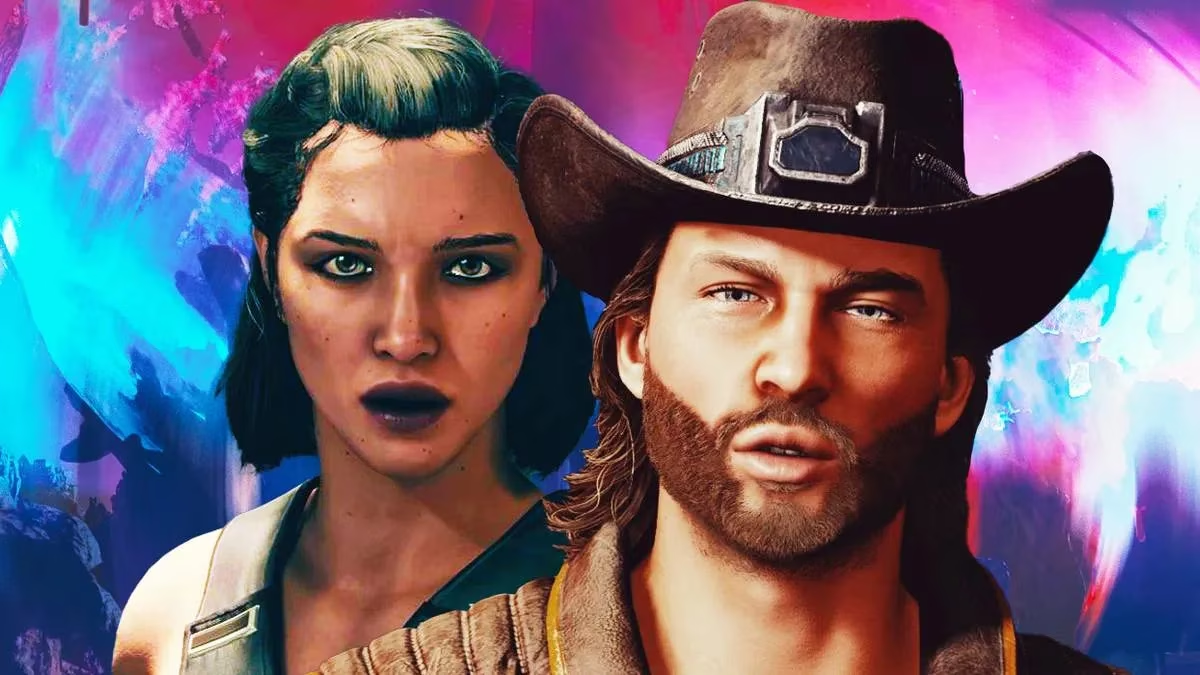
Back then, many players—Jake included—had hoped the expansion would reignite that spark of discovery. Instead, it felt like a beautifully wrapped gift box filled with recycled air. The hand-crafted visuals of Va’ruun’kai were stunning, sure, but once the photo mode screenshots were taken, what was left? A narrative that played it safer than a cargo hauler avoiding piracy. Decisions? Meaningless. Consequences? Minimal. It was a masterclass in the illusion of choice, and the community wasn’t buying it.
The Big Core Problem: Choices That Don’t Matter
Think about it: what’s the point of an RPG if your choices are as substantial as neutrino mass? Jake remembers wiping out UC SysDef in a blaze of glory, expecting at least a wanted poster or a cold shoulder from United Colonies citizens. But the NPCs just blinked with their vacant stares and repeated the same three lines about the weather. It’s like the game has a severe case of narrative amnesia. This isn’t a new complaint—fans have been screaming it since the base game’s New Game Plus revealed that all roads lead to identical Rome. You can betray everyone, side with space pirates, or become the galaxy’s most ethical xenobiologist, and the world barely shrugs. Compared to games like Cyberpunk 2077 (which rebooted its reputation with genuinely branching storylines) or Baldur’s Gate 3 (where every choice tangibly reshapes the world), Starfield feels stuck in a 2011 design philosophy—but without the charm of Skyrim’s reactivity.
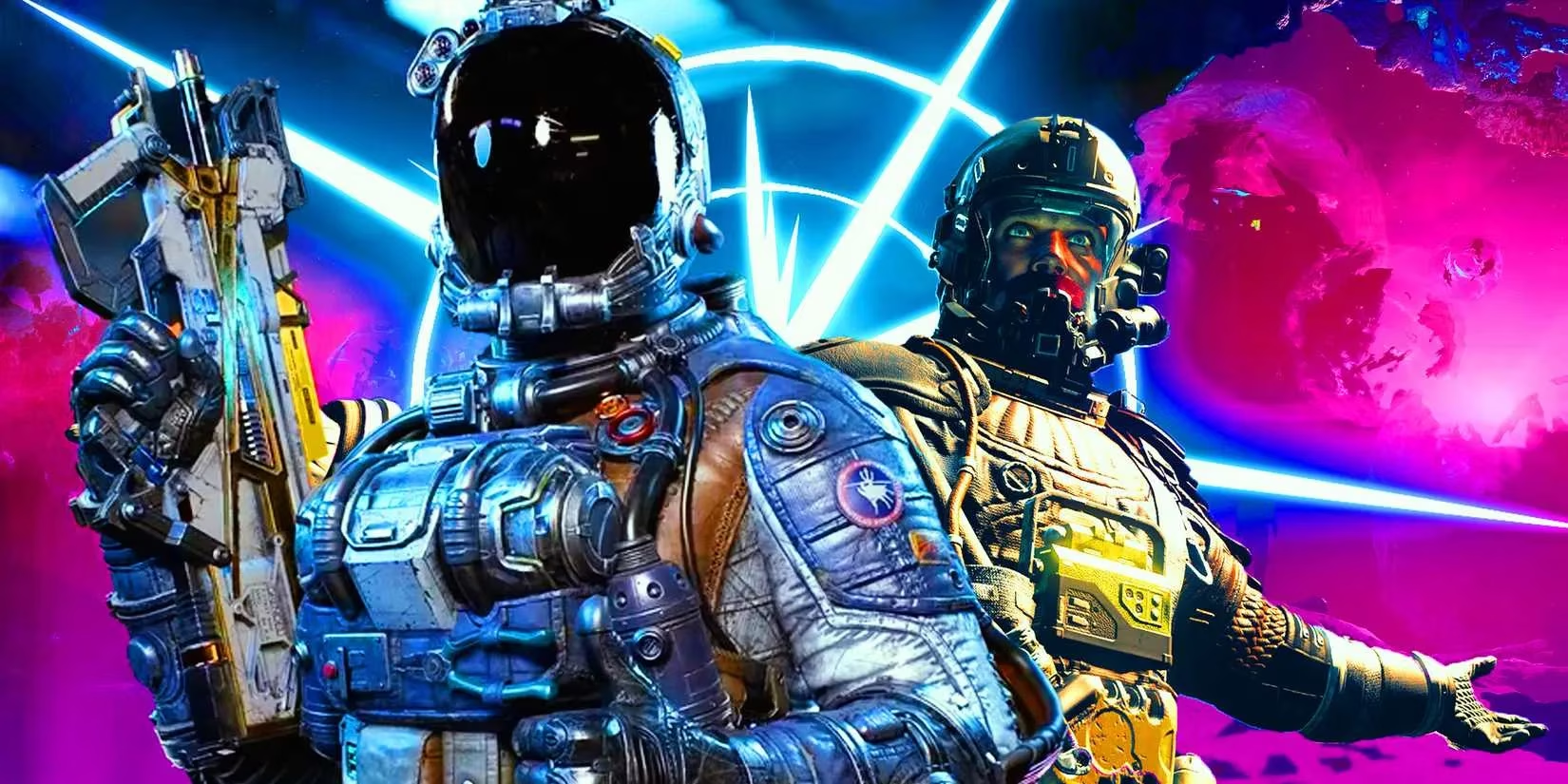
Remember Fallout: New Vegas? How siding with one faction locked you out of others and altered the Mojave’s political landscape? That was 2010. Even Skyrim’s civil war questline, though imperfect, made towns feel different depending on who you sided with. Starfield, for all its procedural planets, feels less alive than a single handcrafted hold in Whiterun. The terror of a Terrormorph attack on New Atlantis? Forgettable. After the mission ends, it’s as if it never happened. The game resets to its bland baseline, leaving Jake wondering if his actions ever truly reverberated beyond a few lines of dialogue.
The Deafening Silence from Bethesda
When Bethesda’s design director Emil Pagliarulo finally addressed the backlash in a 2024 interview, many hoped for a mea culpa or at least a roadmap. Instead, what they got was a defensive shrug that misunderstood the core frustrations. The team pointed to the handcrafted environments as evidence they were listening—but Jake and thousands of others weren’t complaining about the art. They were complaining about the soul. The underlying systems felt brittle, and the DLC didn’t fix the broken RNG that hid the coolest content behind impossible odds. Even the Rev-8 ground vehicle, which arrived months after launch, felt like a Band-Aid on a bullet wound. “Why did it take so long to address traversal boredom?” Jake mutters, “And why can’t I build or customize my own mech?”
Starborn: A Second Chance, Squandered?
Flash forward to 2026. Starborn promised to delve into the multiverse lore and finally make choices matter. The marketing hinted at universe-altering decisions and deep dives into the mysteries of the Unity. Jake, ever the optimist, pre-ordered it for $30. He played it. He finished it. And now he joins the chorus of voices asking: “Did anyone at Bethesda actually play Baldur’s Gate 3?” Because once again, the expansion served up a linear plot train with no off-ramps. Sure, there were some cosmic set pieces and a couple of cool new ship parts, but the fundamental issues remained untouched. NPCs still swim in shallow dialogue puddles. The big “multiverse” twists were underbaked, and the new companions? They talked, but they didn’t say much.
How can a studio so legendary for player freedom keep missing the mark? Some speculate it’s the aging Creation Engine. Others blame a corporate grind that prioritizes scale over substance. But the reality might be simpler: Bethesda hasn’t modernized its understanding of player agency. In an era where games routinely let you talk your way out of boss fights, reshape alliances, and see the world shift in response, Starfield keeps handing out scripted forks that all lead to the same dull spoon.
What Jake (And Everyone Else) Wants
-
Choices that reshape cities and factions, not just journal entries.
-
Meaningful reactivity—NPCs who remember your deeds, for good or ill.
-
Better vehicle customization, because seriously, it’s 2026 and we’re still driving stock buggies.
-
Bug fixes that actually stick, so quests don’t break in the same ways they did in 2023.
-
A willingness to take narrative risks—the Settled Systems feel strangely sanitized, as if the edges were sanded off to avoid offending anyone.
Jake knows the Bethesda crew has talent—he’s seen what they can do. But after two expansions that play it safe and interviews that suggest a fundamental disconnect, his hope for The Elder Scrolls 6 has dimmed. When a game’s biggest surprise is how little surprise there is, you’re not exploring a universe—you’re just passing through a museum diorama. And museums are great, but they’re not meant to be lived in.
Will Bethesda ever recapture the magic? That’s a question with more branching paths than anything in Starfield. For now, Jake’s ship sits in the hangar, gathering space dust.