
It's 2026, and the stars still hold their secrets. 🚀 While players have spent years charting the Settled Systems in Starfield, few know that the serene, utopian vision of space exploration we experience today was almost a blood-soaked spectacle. According to a recent interview with former Bethesda senior artist Dennis Mejillones, the game we know and love was once a much, much more violent affair—a fact that feels almost alien now.
The Gory Ghost in the Machine 👻
Picture this: you're in a tense firefight on a derelict space station. You line up a perfect headshot on a Spacer pirate... and their helmet, with the head still inside, goes spinning off into the zero-g void. That's right, folks—Starfield was initially built with a full-on decapitation and dismemberment system. It was, in Mejillones's own words, set to be "much gorier." This wasn't just a wild idea; it was a fully developed mechanic where enemies would "fly into bits" under certain conditions. Talk about leaving a lasting impression!
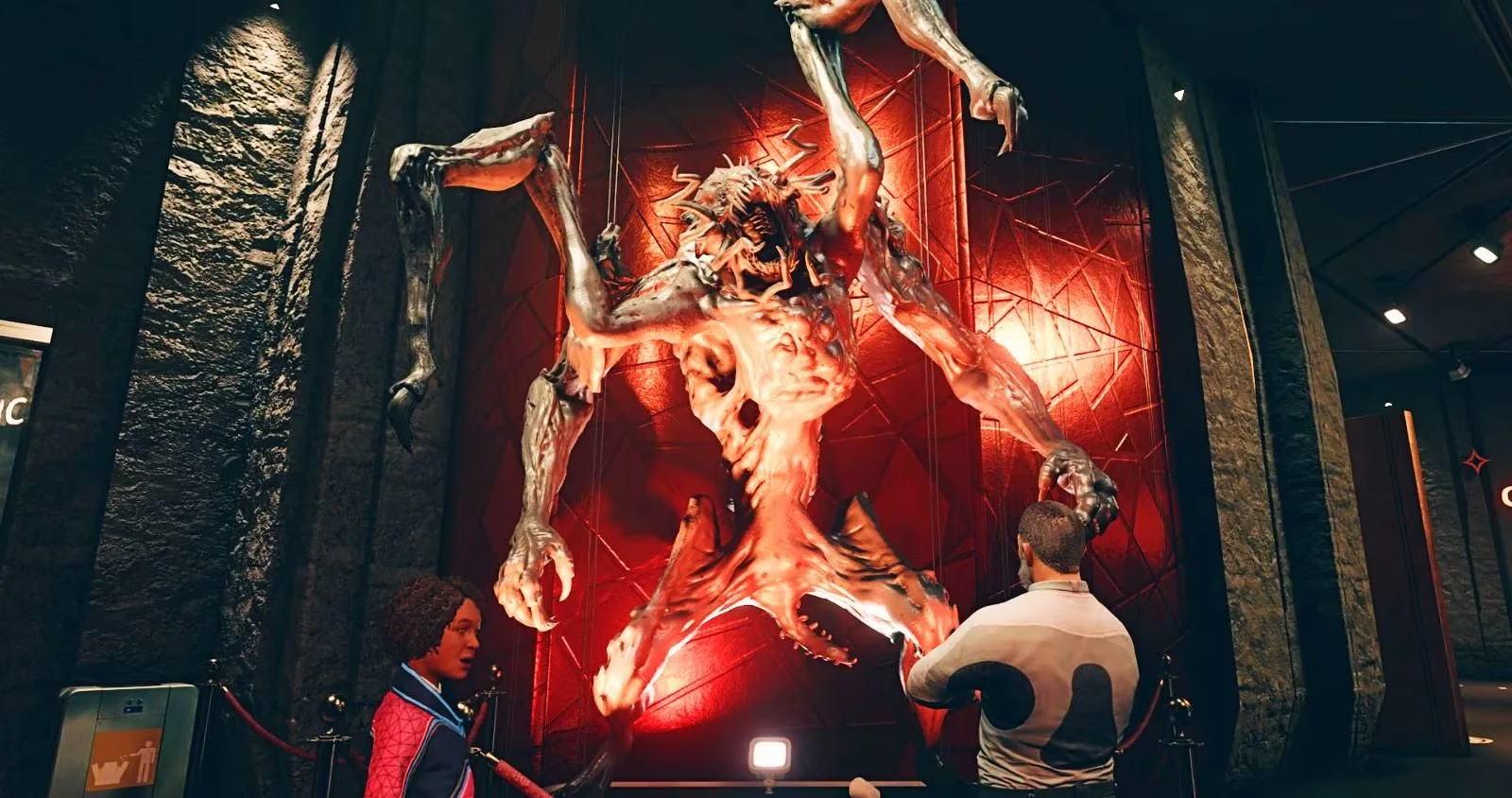
For veterans of Bethesda's other worlds, this might ring a bell. The studio is no stranger to over-the-top violence. The Fallout series, in particular, has the iconic "Bloody Mess" perk, which turns defeated enemies into a random, messy pile of... well, mess. Mejillones, who also worked on Fallout 4, was likely drawing from that same well of chaotic energy. "Fallout is very stylized in that regard," he noted, "that's part of the tongue-in-cheek humor." It seems the team initially thought a dash of that signature Bethesda carnage could spice up the cold vacuum of space.
Why the Cosmic Clean-Up? 🧼
So, what happened? Why did the crimson showers get scrapped? According to the interview, the decision to sanitize the stars came down to two big reasons:
-
The Technical Headache 🤯: Starfield is a game of incredible customization. Think about all the different spacesuits, helmets, and cosmetic attachments. Now, imagine having to create unique, physics-based decapitation animations for every single possible combination of gear and body type. The sheer scale of it was, frankly, a nightmare. The developers realized that ensuring this feature worked seamlessly across the game's vast universe would have been a resource-drain of astronomical proportions.
-
A Clash of Tones 🎭: This was the real heart of the matter. Bethesda took a long, hard look at the game they were building and asked: does this fit? Starfield's inspiration wasn't the gritty, post-apocalyptic satire of Fallout. Its spiritual guides were shows like The Expanse and Star Trek—stories grounded in (relative) realism, focused on exploration, diplomacy, and philosophical questions. Mejillones put it perfectly: "I think for Starfield it was definitely meant to be more low-key and realistic... I think it just didn't fit thematically." A pirate's head popping off like a champagne cork just doesn't mesh with the vibe of negotiating with a principled captain or pondering the mysteries of a gravitational anomaly.
The Road Not Taken... And That's Okay
It's a fascinating "what if." A grittier, more visceral Starfield might have appealed to a different crowd, maybe giving it a more distinct, edgy personality in a crowded genre. Some fans might even argue that the game could have used a bit more... bite. But honestly? Cutting the gore was probably the right call for the game's soul. Including it would have been a major tonal whiplash, distracting from the sense of wonder and discovery that defines the Starfield experience. It's the difference between a harrowing survival thriller and an optimistic sci-fi epic. The developers chose the epic.
This little slice of development history reminds us that the games we play are the result of thousands of deliberate choices. What gets left on the cutting room floor can be just as telling as what makes it in. Starfield chose a path of grounded, hopeful exploration, and while we'll never see those headless spacers, knowing they were once a possibility adds a whole new layer of intrigue to every quiet moment spent gazing at the stars from your ship's cockpit. The silence out there isn't just empty; it's a conscious choice. And honestly? That's kind of beautiful.
The analysis is based on reporting from VentureBeat GamesBeat, a go-to source for how production realities shape what ships in big-budget releases; seen through that lens, Starfield’s cut dismemberment system reads less like “censorship” and more like scope discipline—complex gear permutations, animation edge cases, and tonal consistency are exactly the kinds of factors that can outweigh a flashy feature, even when it’s already prototyped.