
Yo, spacefarers and Constellation hopefuls! Let's talk about the elephant in the room, or should I say, the same abandoned cryo lab on the thousandth planet you've visited. It's 2026, and the conversation around Starfield's Points of Interest (POIs) is still, well, a point of interest. Despite the release of the Shattered Space expansion, the core issue persists, and it's time for a real talk about why simply adding more stuff isn't cutting it and what a true fix might look like.
Since launch, the POI system has been a major pain point. The current setup uses a handful of handcrafted locations—think mining outposts, research labs, and derelict ships—that get plopped onto planets at random. To try and spice things up, the game then RNGs the loot and enemy placements inside. Sounds okay on paper, right? But in practice, it's a recipe for deja vu. Players quickly realized they were seeing the exact same layouts, the same dead bodies with the same data slates, and the same environmental storytelling beats. Every. Single. Time. It killed the sense of discovery, the mystery, and any real challenge, because you knew the drill before you even landed. Talk about a vibe killer.
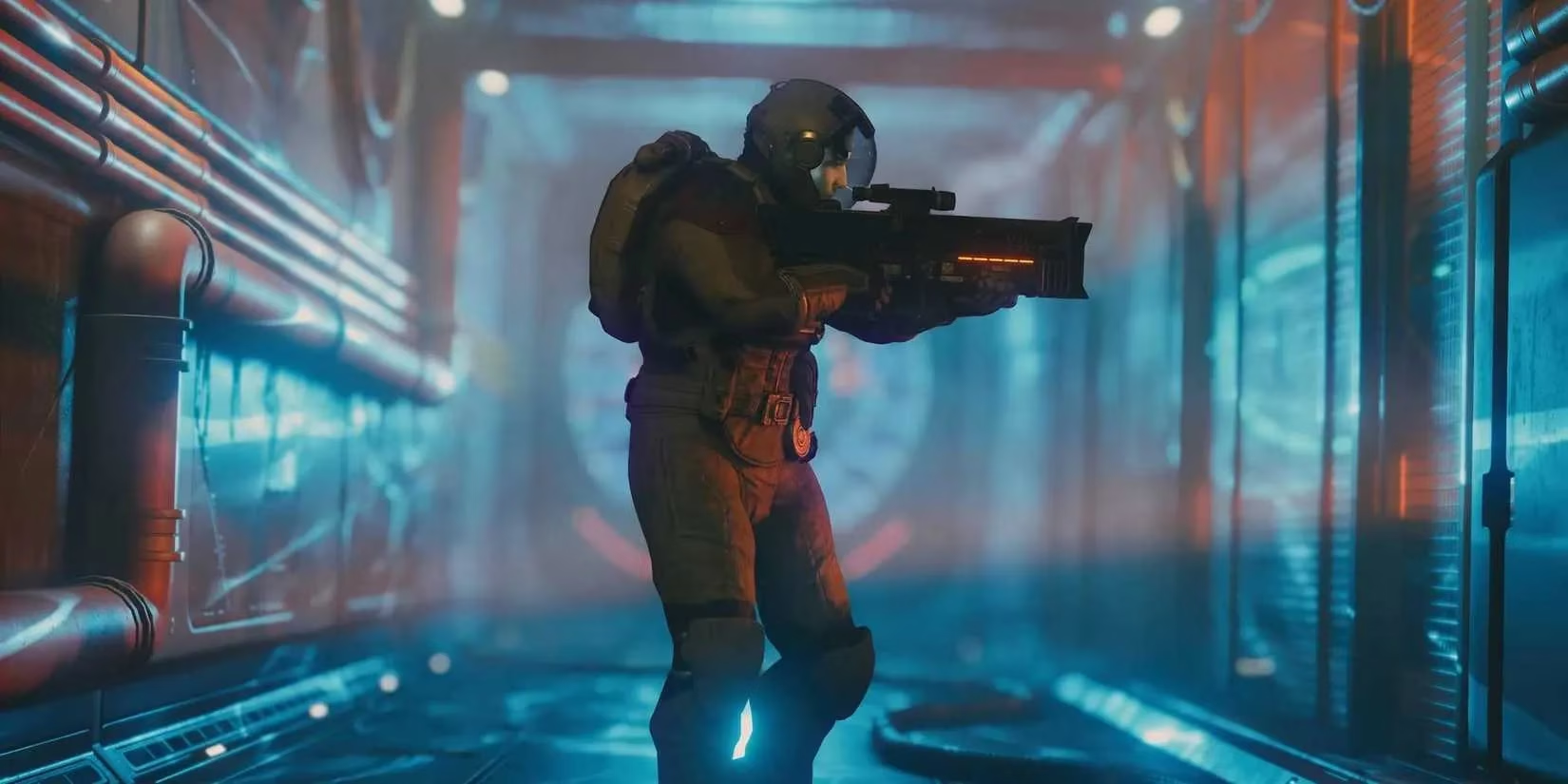
Shattered Space: A Band-Aid on a Bullet Wound?
Bethesda's Shattered Space DLC tried to address this by throwing a bunch of brand-new, handcrafted POIs into the mix. And don't get it twisted, more content is always welcome! It did help... temporarily. It expanded the pool and gave veterans something fresh to uncover. But let's be real, it was a band-aid solution. Once you've played through the new stuff, you're right back to the same old grind on the thousand other planets. The root problem wasn't the number of POIs; it's the system itself. Doing the same prefab content on repeat gets boring, period. The game is screaming for a shift towards intelligent procedural generation.
The Modular POI Solution: Learning from the Masters
Okay, hear me out. The real game-changer wouldn't be another 50 handcrafted bases. It would be ditching the copy-paste model for modular POIs. Think about it like Lego for game design. Instead of plopping down a complete, static "Abandoned Mining Outpost A," the game would have a library of assets and tilesets—different room types, corridors, control centers, habitation blocks, etc.
When you discover a POI, the game would snap these modules together in a random (but logical) order, creating a truly unique layout every time. This is how games like No Man's Sky handle its creatures and Remnant 2 builds its incredibly immersive, ever-changing worlds. The beauty? You could still maintain lore consistency. A Freestar Collective mining station would always have that rustic, industrial feel, but you'd never know if the mess hall was to the left or right of the reactor core. That element of the unexpected is what's missing.
Why Handcrafted Isn't the Holy Grail
A lot of fans have been chanting "more handcrafted content!" since day one. But Shattered Space proved that's not the silver bullet. Even its beautifully crafted, bespoke world couldn't save the repetitive core experience. Eventually, you leave that story bubble and return to the vast, copy-pasted galaxy. Modular generation fixes the base game in a way that no amount of DLC ever could. It's a systemic overhaul, not just more content.
The Immersion-Breaking Nonsense
And let's not forget the other big oof: POI placement often makes zero sense. Shattered Space didn't fix this either. You'll find a civilian outpost with picnic tables on a planet with a toxic, unbreathable atmosphere. You'll see the same "unique" pirate hideout three times in the same star system. This random placement creates a world that feels inconsistent and breaks immersion faster than a grav jump glitch.
In a pure sandbox like No Man's Sky, you can hand-wave this away because everything is procedural. But Starfield sells itself on a detailed, narrative-driven universe. When the worldbuilding logic falls apart so obviously, it feels like a mistake. Sure, the modding community has done some absolutely goated work fixing things, but it shouldn't be on them to make the game feel coherent. That's on Bethesda.
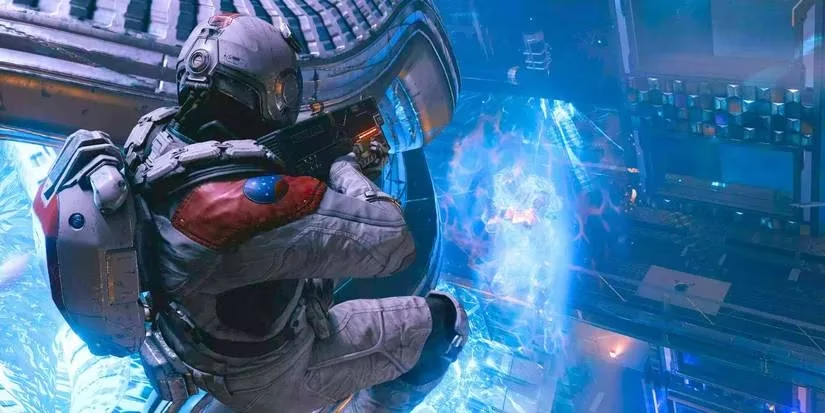
The Path Forward for Starfield
So, what's the verdict? Adding more POIs is a short-term fix. If Bethesda adds a truly massive amount, maybe repetition becomes less noticeable. But the smarter, more future-proof play is a dual approach:
-
Implement Modular POI Generation: Create a system that builds locations dynamically from a deep pool of assets. This ensures novelty and replayability.
-
Fix POI Placement Logic: Tie POI spawning to planet biomes, faction influence, and system lore. No more picnic tables on Venus 2.0.
Without these changes, Starfield will always feel more like a checklist of video game levels and less like the immersive "NASA-punk" space sim it aspires to be. The potential is still there, buried under all that repetitive clutter. It's time for Bethesda to think outside the (prefabricated) box. What do you think, captains? Is modular generation the way, or should they just keep pumping out DLC? Sound off in the comments! ✌️🚀