
When Bethesda first opened the star map of Starfield in 2023, it offered a galaxy of factions that each promised a different fantasy. Constellation chased wonder. The UC Vanguard carried a military badge. The Freestar Rangers wore independence like a dusty coat. Ryujin Industries sharpened corporate knives. The Crimson Fleet laughed from the black. Yet one name kept surfacing like a distant radio pulse: House Va'ruun. The secretive worshippers of the Great Serpent were mentioned in whispers, abandoned outposts, and lore fragments, but players could not sit across from them, bargain with them, or truly understand them. That absence felt less like an oversight and more like a sealed airlock: warning lights blinking, pressure building, and no one willing to turn the handle.
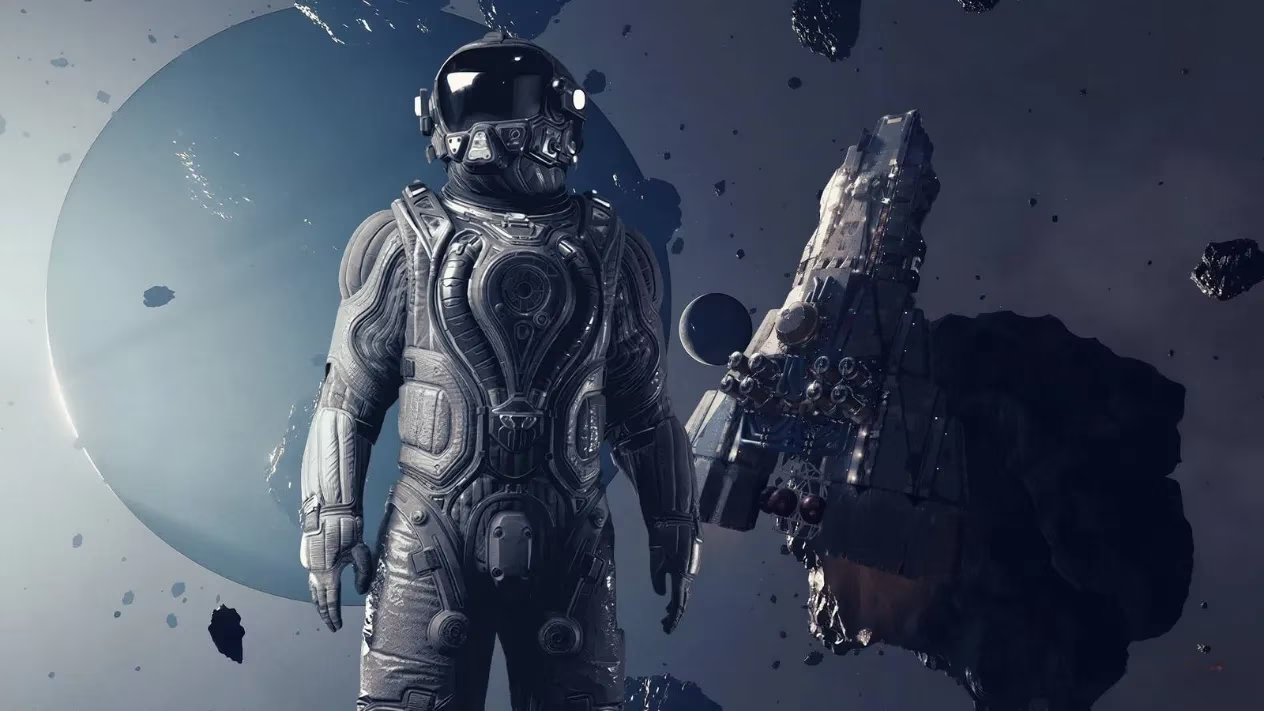
By 2026, the conversation has changed. Shattered Space, the first major expansion, launched in late 2024 and pushed Starfield into cosmic horror territory. The trailer alone teased a darker chapter in Bethesda's space epic, showcasing House Va'ruun as more than a mystery. Based on what was revealed, the faction appeared to be a dangerous cult. Until then, all that was known about the secretive group was that they worshipped a mysterious deity known only as the Great Serpent. The expansion gave that worship a terrifying texture, and for many players, House Va'ruun became the most compelling corner of the Settled Systems.
The base game's five main factions all had unique qualities. A quick look at the roster shows what each brought to the table.
| Faction | Identity | What It Brought to the Base Game |
|---|---|---|
| Constellation | Explorers and idealists | The main story's sense of wonder |
| UC Vanguard | United Colonies military | Structure, duty, and galactic politics |
| Freestar Rangers | Frontier lawmen | Libertarian independence and Western energy |
| Ryujin Industries | Corporate powerhouse | Espionage, ambition, and cutthroat business |
| Crimson Fleet | Space pirates | Chaos, crime, and moral flexibility |
| House Va'ruun | Veiled serpent cult | Dread, mystery, and a promise saved for later |
Constellation's passion for exploration brought the main story to life. The independence-loving Freestar Rangers showcased the Freestar Collective's attempt at galactic libertarianism. The UC Vanguard made its name as the military of the United Colonies. Ryujin Industries embraced the cutthroat corporate world. The Crimson Fleet were ruthless space pirates. All groups brought something to the table, but these five factions could not keep Starfield's base version from feeling a little underwhelming. House Va'ruun, by contrast, was a gravitational anomaly in the narrative, bending every rumor toward itself without ever showing its face.
Despite being absent from the base game, Starfield made House Va'ruun's importance clear. It was wild that a faction mentioned so many times throughout the story was largely left as a mystery. Of course, this was clearly used as a method to drum up excitement for Shattered Space. The strategy worked. The base game was a wide, well-lit atrium; House Va'ruun was the locked door at the end of the hall, humming with something that did not want to be understood. Players could feel the cult's presence even when they could not see it.
When Shattered Space finally arrived, it was like a splinter of black glass in a familiar sky. The expansion turned curiosity into dread. House Va'ruun's fanaticism became central, and the Great Serpent shifted from a vague piece of lore into a source of cosmic horror. The faction was no longer just a name in a loading screen. It was a living, breathing danger, complete with rituals, secrets, and a theology that could swallow a star. Bethesda's decision to withhold the faction from the base game was bold, and it gave the expansion a gravitational pull that the original release sometimes lacked.
With Starfield's divisive reception, only time will tell if Bethesda will make a follow-up. If it does, House Va'ruun should stand as the blueprint for further factions. The group adds a missing spice that was desperately needed in the base game. Its blend of religious fanaticism, hidden history, and cosmic horror offers a template for factions that are not merely quest dispensers, but psychological landscapes. A future Starfield should look more like Shattered Space and less like a continuation of the base game's safest instincts.
Here are a few lessons the expansion leaves behind:
-
🔭 Mystery needs a payoff, but the payoff should deepen the mystery rather than erase it.
-
🐍 A faction can be frightening without being simple; fanaticism is more interesting when it has poetry.
-
🌌 Cosmic horror fits space opera when it is treated as a natural consequence of scale, not a genre sticker.
-
🚪 The best lore is the kind that seems to watch the player back.
In 2026, House Va'ruun remains the strange heart of Starfield's post-launch identity. The Great Serpent may still be coiled in the dark, but its influence is undeniable. If Bethesda ever returns to the Settled Systems, it should follow the serpent's trail. The wait was worth it, and the cult proved that even a galaxy of polished factions can be redeemed by one dangerous idea.