
As the dust settles from the launch of Starfield's inaugural DLC, Shattered Space, the gaming community's gaze is fixed firmly on the horizon. Bethesda's sprawling space epic, a universe once described as a canvas of untapped potential, now stands at a critical juncture. While its foundational launch offered a galaxy brimming with procedural wonders, many felt its worlds were like beautifully wrapped but empty gift boxes—alluring on the outside but lacking substance within. With Todd Howard's vision of annual content updates, the studio's roadmap seems clear, yet the ultimate destination remains shrouded in the cosmic unknown. The path to longevity, however, may be charted in the stars of another titan: Hello Games' No Man's Sky, a title that transformed from a divisive debut into the gold standard for living, breathing space simulations.
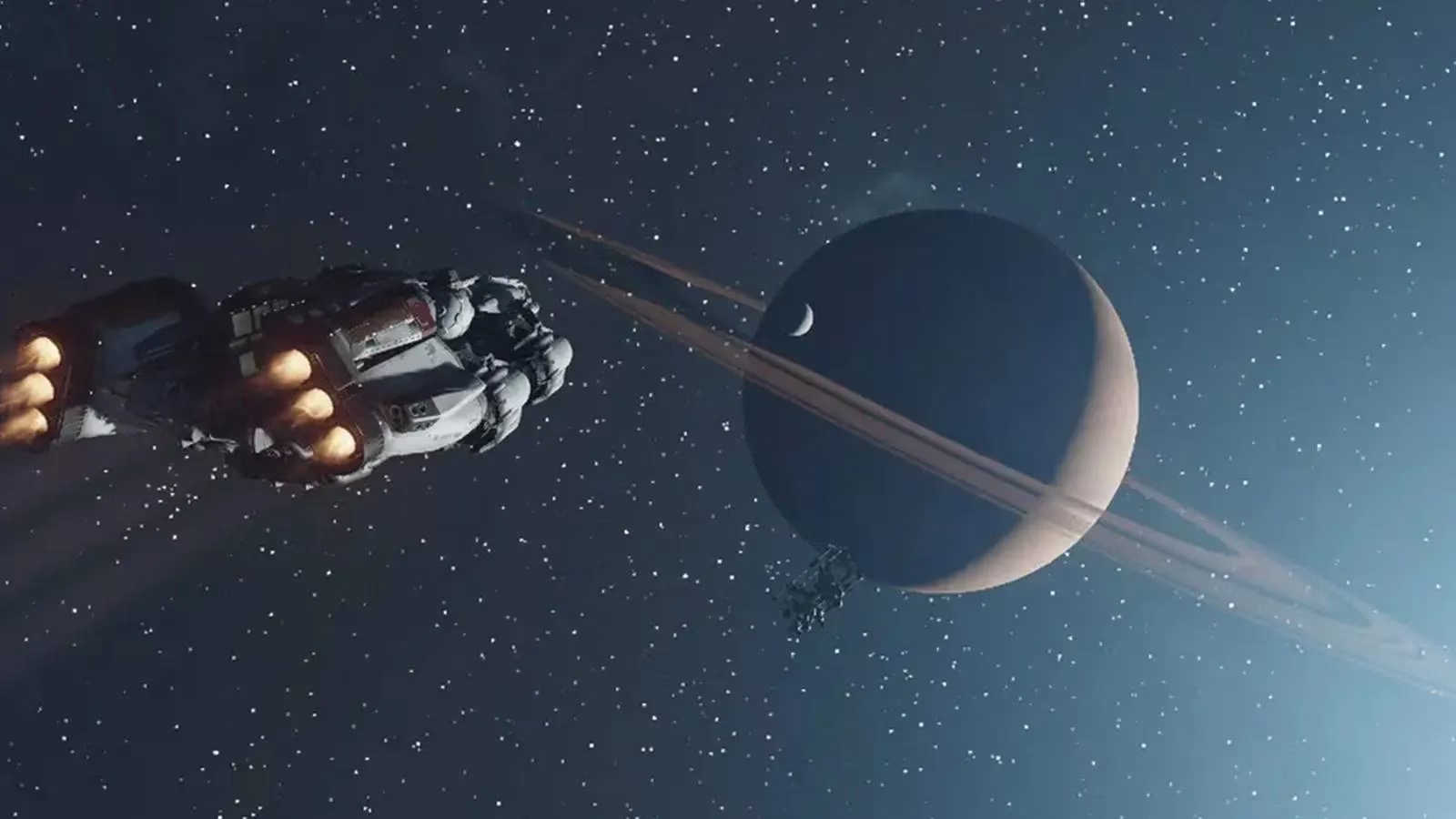
The No Man's Sky Blueprint: A Masterclass in Evolution
Hello Games' journey with No Man's Sky is nothing short of legendary in the annals of video game development. Its initial release was a seismic event, not for fulfilling promises, but for showcasing a vast, lonely universe that felt as hollow as a ghost ship adrift in the void. Instead of retreating, the studio embarked on a relentless, years-long campaign of redemption through content. This commitment has turned the game into a constantly evolving organism, growing new limbs and features with each passing year.
Consider the sheer scale of additions:
-
Foundation Updates: Introduced base building, transforming players from nomads into settlers.
-
Narrative Expansions: Wove intricate stories like the "Atlas Path" and community expeditions.
-
Gameplay Revolutions: Added features like full-scale freighter management, underwater exploration, and robotic companions.
This strategy did more than add content; it rebuilt player trust and fostered a dedicated community that returns with every update, treating the game like a digital home that is perpetually being renovated and expanded.
Starfield's Untapped Potential: A Galaxy Waiting to Breathe
Starfield's core offering shares DNA with its predecessor. It presents a mammoth, procedurally generated playground. Yet, criticism often centered on the repetitive nature of its planetary exploration, where many worlds felt like meticulously detailed museum dioramas—beautiful to look at but with "Do Not Touch" signs firmly in place. This is where the No Man's Sky model becomes not just inspirational but essential.
Bethesda has a profound opportunity to inject life into these static spheres. Post-launch support could transform Starfield from a wide-but-shallow ocean into a deep, thriving ecosystem. Potential update avenues include:
| Update Focus Area | Potential Features | Impact on Gameplay |
|---|---|---|
| Planetary Diversity | New biome types (e.g., crystalline forests, fungal jungles), dynamic weather catastrophes, exotic creature behaviors. | Makes exploration unpredictable and rewarding, akin to discovering new species in a cosmic rainforest. |
| Player Agency & Base Building | Expanded outpost mechanics, player-driven economies, ship interior customization, and community hubs. | Transforms the player from an explorer into a true architect of their own galactic legacy. |
| Narrative Depth | Faction-based story DLCs, dynamic event systems, and procedurally generated quests with meaningful consequences. | Ensures the universe feels alive and reactive to player choices long after the main story concludes. |
The Roadmap to Forever: Lessons in Sustained Engagement
For Starfield to achieve the evergreen status Howard envisions, it must learn from Hello Games' playbook: consistency and communication are key. No Man's Sky's updates are not sporadic; they are anticipated annual events that reliably expand the universe's boundaries. Bethesda can adopt a similar cadence, using Shattered Space as the first major stepping stone.
Imagine a future where a Starfield update doesn't just add a new questline but fundamentally alters the galactic landscape—introducing a new alien threat that reshapes faction alliances, or a technological breakthrough that allows travel to a entirely new cluster of stars. The game's more realistic aesthetic is no barrier; in fact, it provides a rich foundation for grounded yet fantastical expansions, such as deep-space corporate warfare or the discovery of precursor artifacts that defy known physics.
Conclusion: A New Dawn for the Settled Systems
As of 2026, the potential for Starfield is as infinite as the cosmos it simulates. The framework for a decade-long journey is already in place, mirrored by the proven success of No Man's Sky. Bethesda's challenge is not one of capability, but of commitment. By embracing a philosophy of continuous, meaningful growth—treating its galaxy not as a finished product but as a living narrative seed—Starfield can evolve from a notable launch into a timeless pillar of the sci-fi genre. The stars are not the limit; they are merely the beginning. The journey ahead promises to be one of transformation, where empty worlds become bustling frontiers and solitary explorers become legends shaping the fate of the galaxy. 🚀✨