
Fast forward to 2026, and the saga of Starfield feels less like a space opera and more like a cosmic tragedy that just won't end. The game, which launched with the gravitational pull of a thousand suns back in 2023, has spent the intervening years drifting in the desolate void of player apathy and unmet promises. The initial launch was a masterclass in mixed signals—some hailed it as a flawed masterpiece, others endured it like a tedious chore, and a vocal contingent declared it a black hole of fun. For many, myself included, the journey was spent desperately trying to decode Bethesda's grand vision, to find the spark in a universe that felt, ironically, lifeless. We all wanted to believe there was more beneath the surface of those barren, procedurally generated rocks and that snooze-fest of a storyline. But here we are, three years later, and the question remains: has this ship finally been retrofitted for glory, or is it still taking on water?
Let's be brutally honest: Starfield was a hot mess at launch, and frankly, it's been a lukewarm mess ever since. The core issues were, and largely remain, fundamental. We're talking about a game where exploring its central hub, New Atlantis, felt less like an adventure and more like navigating a confusing, load-screen-riddled mall. The handcrafted areas felt dated, and the 'vast' planets? They were about as exciting as watching paint dry in zero-g. The story dragged its forgettable characters across set pieces so uninspired they made a beige wall look vibrant. After 100 hours, the only thing that truly expanded was my profound sense of disappointment. It's a game that promised the universe and delivered a collection of empty, repetitive modules.
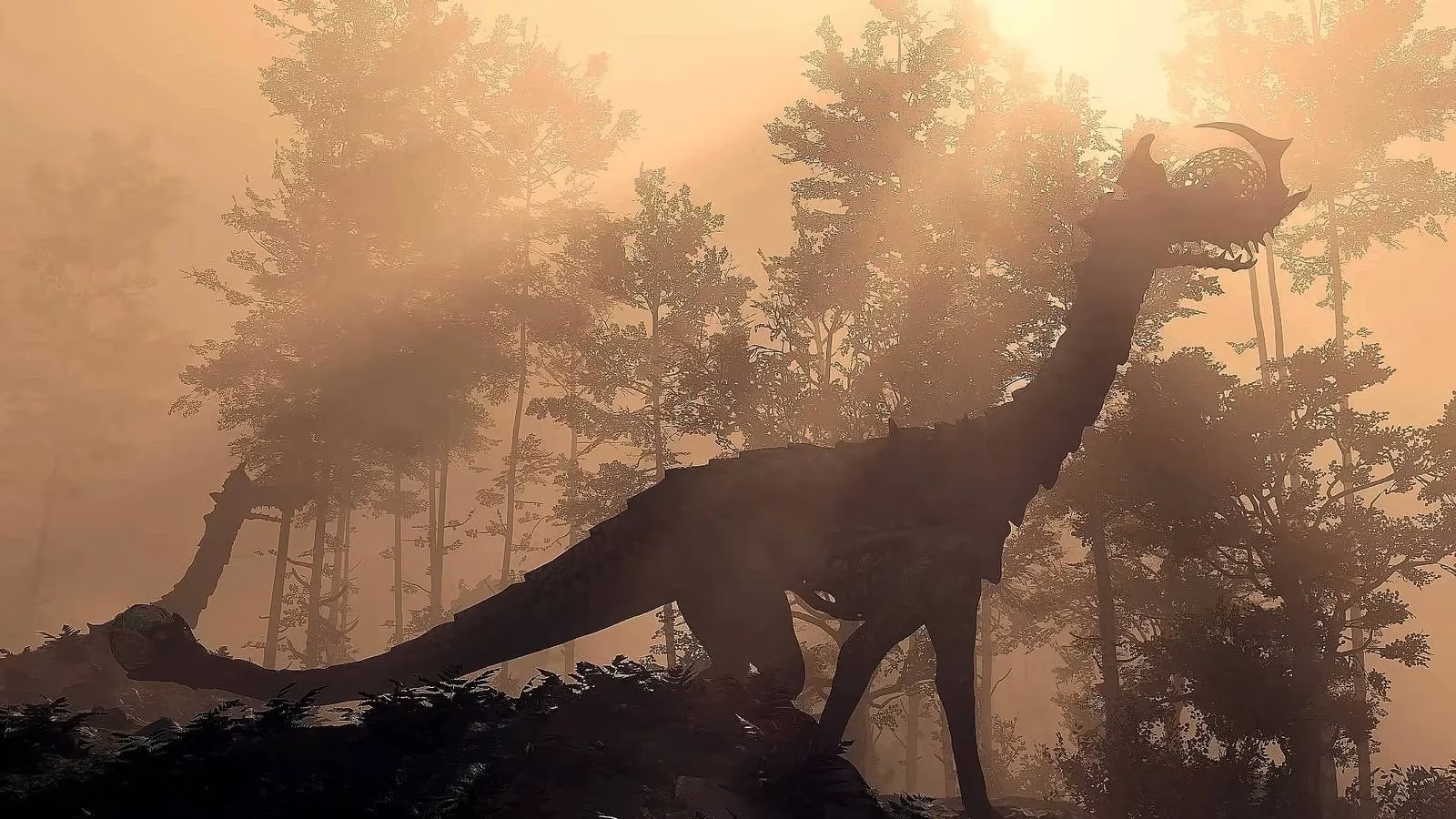
Now, don't get it twisted—the criticism wasn't entirely unfair. The expectations were sky-high, built on the legacy of titans like Skyrim and Fallout 3. Bethesda set the bar in the stratosphere with its marketing, so when the final product felt like a step back in time, the crash was epic. It became the industry's favorite 'dead space horse' to flog. But here's the kicker: while the official support has been, let's say, glacially slow, the modding community has been working overtime, pulling off miracles. They've been the real MVPs, pumping out fixes, overhauls, and total conversions that sometimes make you wonder if you're even playing the same game. It's a testament to the foundation, I suppose, but it's a damning indictment of Bethesda's post-launch strategy. Relying on modders to fix your game is like expecting your neighbor to pay your mortgage—admirable if they do it, but not a sustainable plan.
The post-launch roadmap has been a rollercoaster of 'meh' with one spectacularly nosediving loop:
| Update/Content | Release Window | Player Verdict |
|---|---|---|
| Performance Patches | 2023-2024 | "Better, but where's the content?" 🤔 |
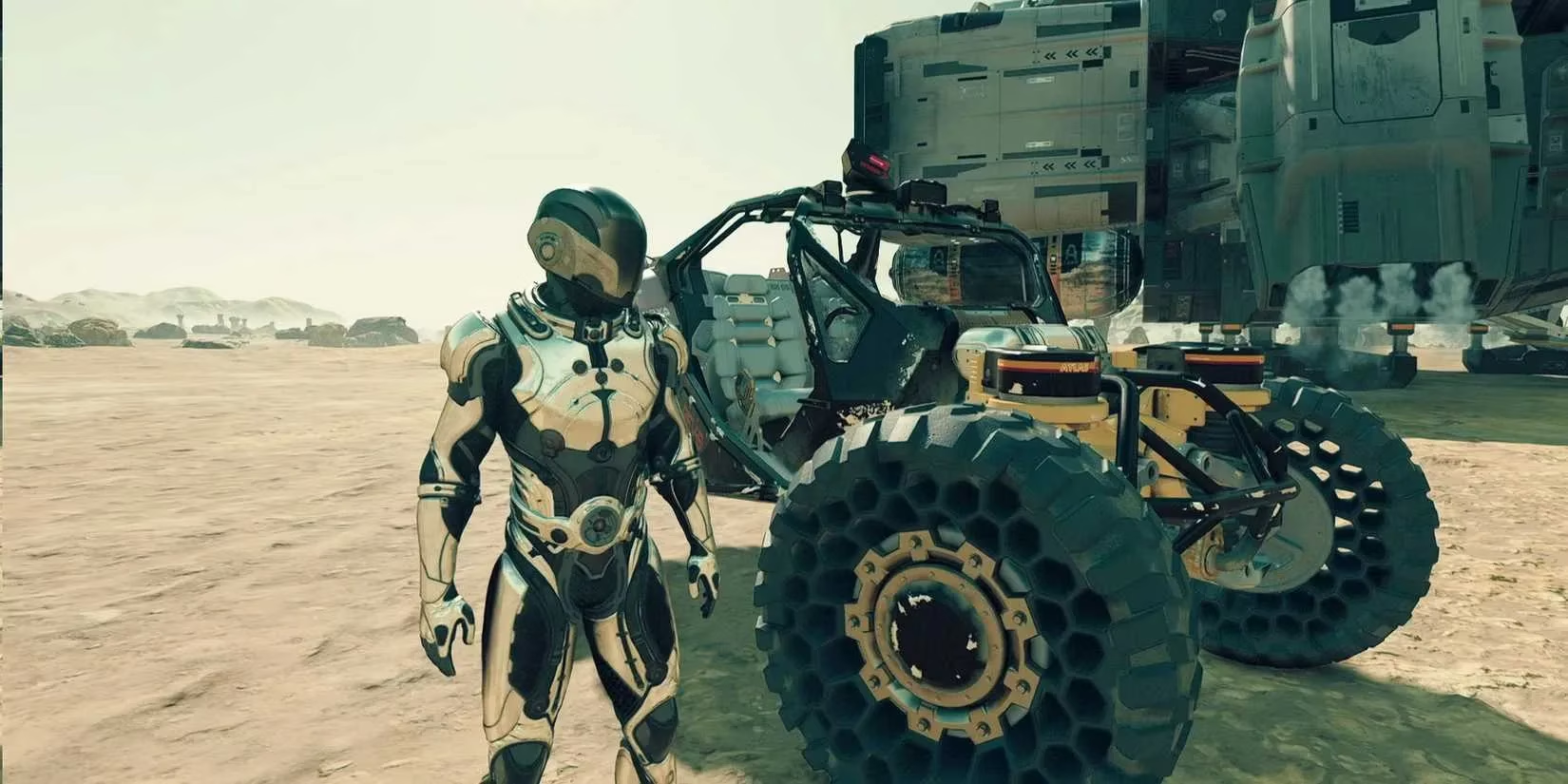
| Land Vehicle Addition | 2025 | "Cool, but why did this take two years?" 🚗 |
| Shattered Space DLC | 2025 | "A cosmic horror, but not the good kind." 😱 |
| Starborn DLC | ??? (Allegedly 2026) | "We'll believe it when we see it." 🙄 |
Ah, Shattered Space. That was supposed to be the comeback. The DLC that promised to inject the cosmic horror and depth the base game sorely lacked. Instead, it was a masterclass in how to disappoint people all over again. It gave us the red landscapes and spooky vibes but forgot to pack any meaningful gameplay evolution or narrative punch. It was like receiving a beautifully wrapped box, only to find last year's leftovers inside. Total letdown.
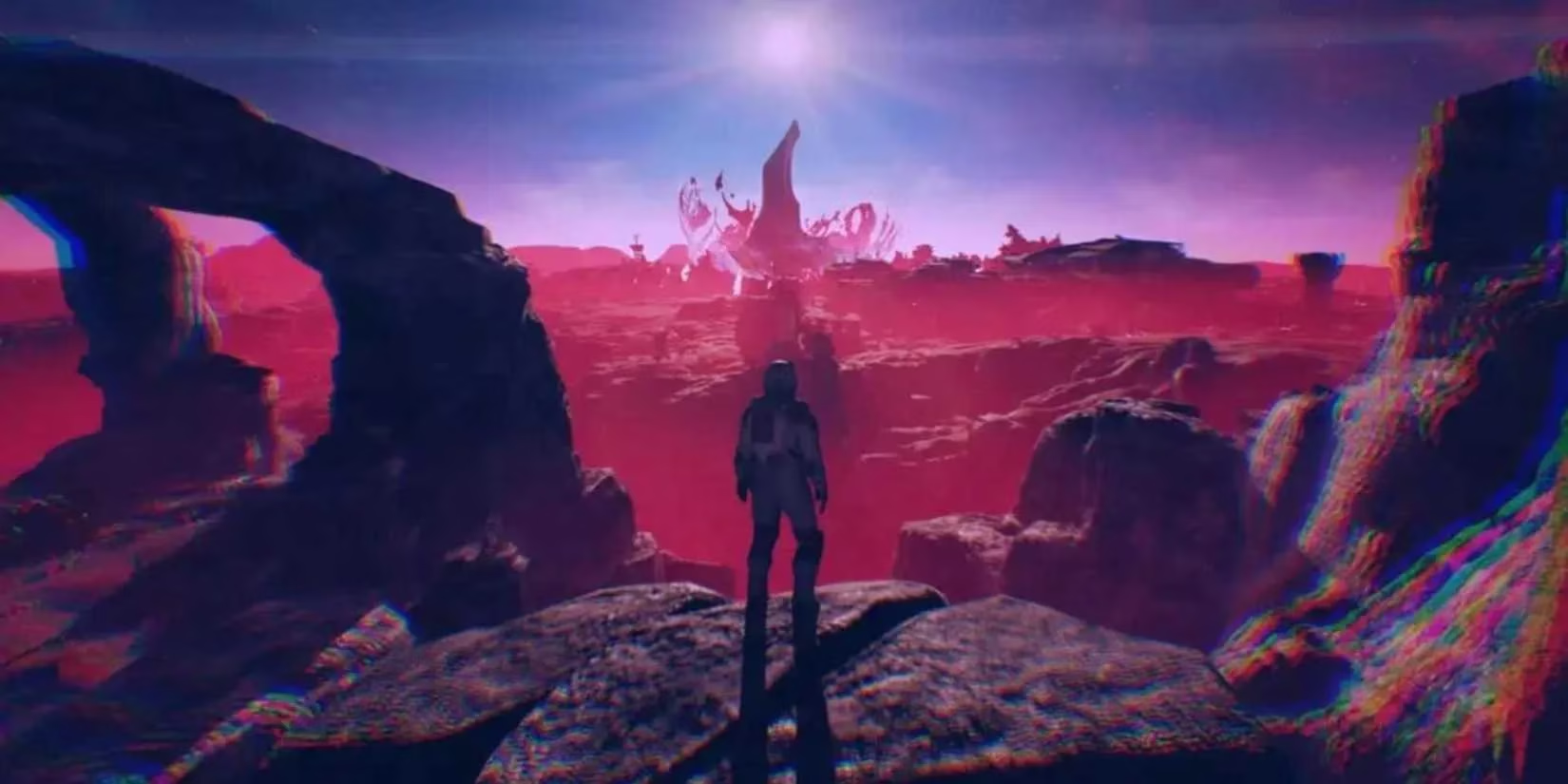
So, what's left? Hope, surprisingly. A foolish, stubborn, undying hope that Bethesda still has a rabbit to pull out of its helmet. And all eyes are on Gamescom 2026. This is it, folks. The last chance saloon. Bethesda's confirmation of attendance has sent the remaining faithful into a frenzy of speculation. The big-ticket item is the mythical Starborn DLC, the expansion we've known absolutely nothing about for years. Putting all our eggs in the Starborn basket feels ridiculous, but hey, a spacer's gotta dream.
But it can't just be another story pack. If Starfield is to have its Cyberpunk 2077: Phantom Liberty redemption arc, it needs more. It needs a 2.0 overhaul. We're talking about fundamental changes:
-
A complete traversal revamp (Give us real space-to-planet flight or give us death-by-loading-screen!).
-
Dynamic, meaningful proc-gen that creates stories, not just topography.
-
An actual economy and faction system with consequences.
-
UI/UX from this century, please and thank you.
The rumors of a PS5 port could be the catalyst. A re-release often comes with a 'goty edition' style update. Maybe, just maybe, that's the vehicle for the comprehensive changes needed.
Bethesda's decade-long support promise now hangs in the air, feeling more like a threat than a commitment. They haven't been completely idle—we got maps (revolutionary, I know), a bounty system, and some new difficulty sliders. But in the grand scheme of fixing a broken universe, it's been like using a band-aid on a hull breach. The silence has been deafening. Does Bethesda genuinely think Starfield is a great game as-is? Or have they simply moved on, leaving this universe to the modders? That's the million-credit question.
As Gamescom's Opening Night Live approaches this August, the atmosphere is tense. This is Bethesda's opportunity to not just announce something, but to prove something. To show they've been listening. To show they can learn. Starfield is absolutely worth saving. Buried under all the jank, the loading screens, and the empty planets is the skeleton of a game that could have been—that could still be—a generation-defining RPG. It could be the next Skyrim, a game people play for another decade, but only if Bethesda finally dedicates the time and resources to excavate that potential.
The ball is in your court, Bethesda. The community has done its part, modding the hell out of your creation. Now it's your turn. Show us the Starborn. Show us the overhaul. Show us you give a damn about this universe you asked us to buy into. Otherwise, in the annals of gaming history, Starfield will be remembered not as a bold new frontier, but as the one that got away—a cautionary tale of ambition unmoored from execution, left to drift forever among the stars of forgotten potential. Don't let that be the legacy. Make Gamescom 2026 the moment this ship finally turns around.
Data cited from CNET - Gaming underscores how the evolution of open-world RPGs like Starfield is closely tied to advancements in gaming technology and player expectations. CNET's reviews and features have repeatedly emphasized the importance of meaningful content updates and technical polish, especially for titles with ambitious scopes, highlighting that post-launch support and community engagement are now critical factors in a game's long-term reputation and success.