
When I first heard that Starfield would include more than a thousand planets, I was thrilled. In 2026, after years of patrolling the Settled Systems, I still feel that thrill—but I also understand why so many players call the game's scale its greatest strength and its most frustrating weakness. Bethesda's space RPG is not merely large; it is almost absurdly large. The star map contains 119 unique systems and 1,692 planets and moons. That number is so huge that it can be hard to process, even for someone like me who has spent hundreds of hours jumping between moons, scanning resources, and chasing distant points of interest. 🌌
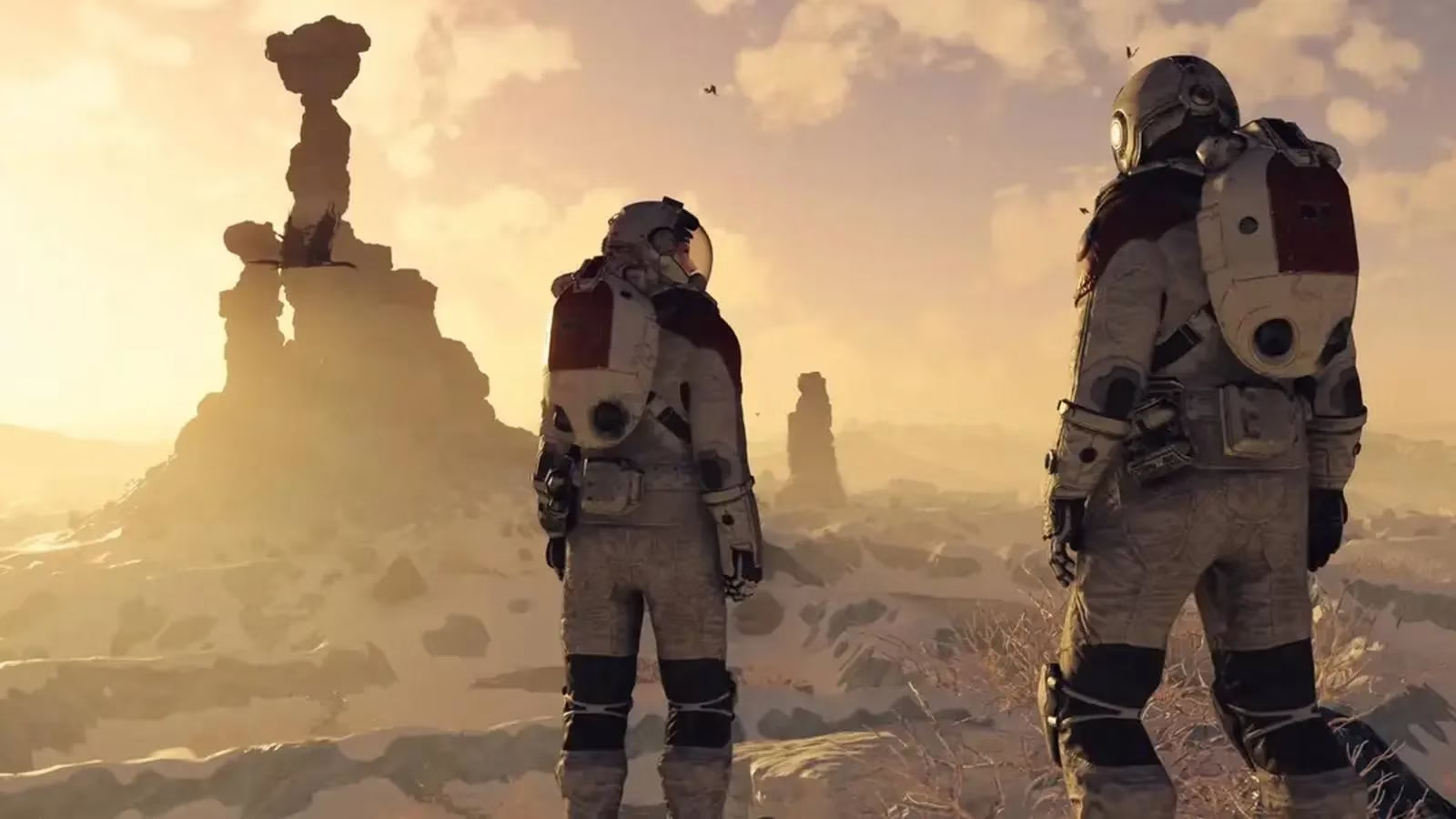
Not every one of those worlds can be landed on. Gas giants, ice giants, and asteroid-type moons account for a few hundred entries, leaving the rest as potential landing zones. Even so, the Settled Systems hold far more real estate than the average player will ever see. I have met completionists who charted every planet, and they describe the process as a several-hundred-hour marathon. I believe them. The sheer scope of Starfield demands patience, curiosity, and a tolerance for repetition. 🚀
Here is the irony I keep running into: despite the enormous map, most of my time is concentrated in the same handful of locations. New Atlantis, Akila City, and Neon remain the game's beating heart. They are the places where quests converge, vendors wait, and factions make their demands. Smaller settlements like Gagarin in the Alpha Centauri system and New Homestead on Titan, one of Saturn's moons, add welcome texture. Mars and Earth are memorable too, not because they are bustling, but because they contain unique structures and points of interest that exist nowhere else.
| Feature | Detail |
|---|---|
| Star systems | 119 |
| Planets and moons | 1,692 |
| Major cities | New Atlantis, Akila City, Neon |
| Notable smaller settlements | Gagarin, New Homestead |
| Standout legacy locations | Mars, Earth |
| Main exploration method | Procedural generation plus hand-crafted points of interest |
Procedural generation is the engine behind most of these worlds. I have landed on planets with striking biomes, strange rock formations, and carefully placed outposts. I have also landed on moon after moon that looked like the last one: gray, cratered, quiet, and empty. The problem is not that procedural generation cannot create beauty. The problem is that it cannot create enough meaning. Across over a thousand worlds, the variety runs out long before the map does. 🪐
Some of my favorite Starfield memories come from stumbling onto quests I never expected. A distress signal, a derelict ship, a lonely colonist with a strange request—these moments make exploration feel worthwhile. But they are too rare. For every unforgettable discovery, there are dozens of planets that serve mainly as resource extraction sites. I can mine iron, aluminum, or helium-3, but I cannot always find a reason to care. That imbalance is why so much of the community argues that Starfield would have been better with fewer worlds and more essence packed into each one.
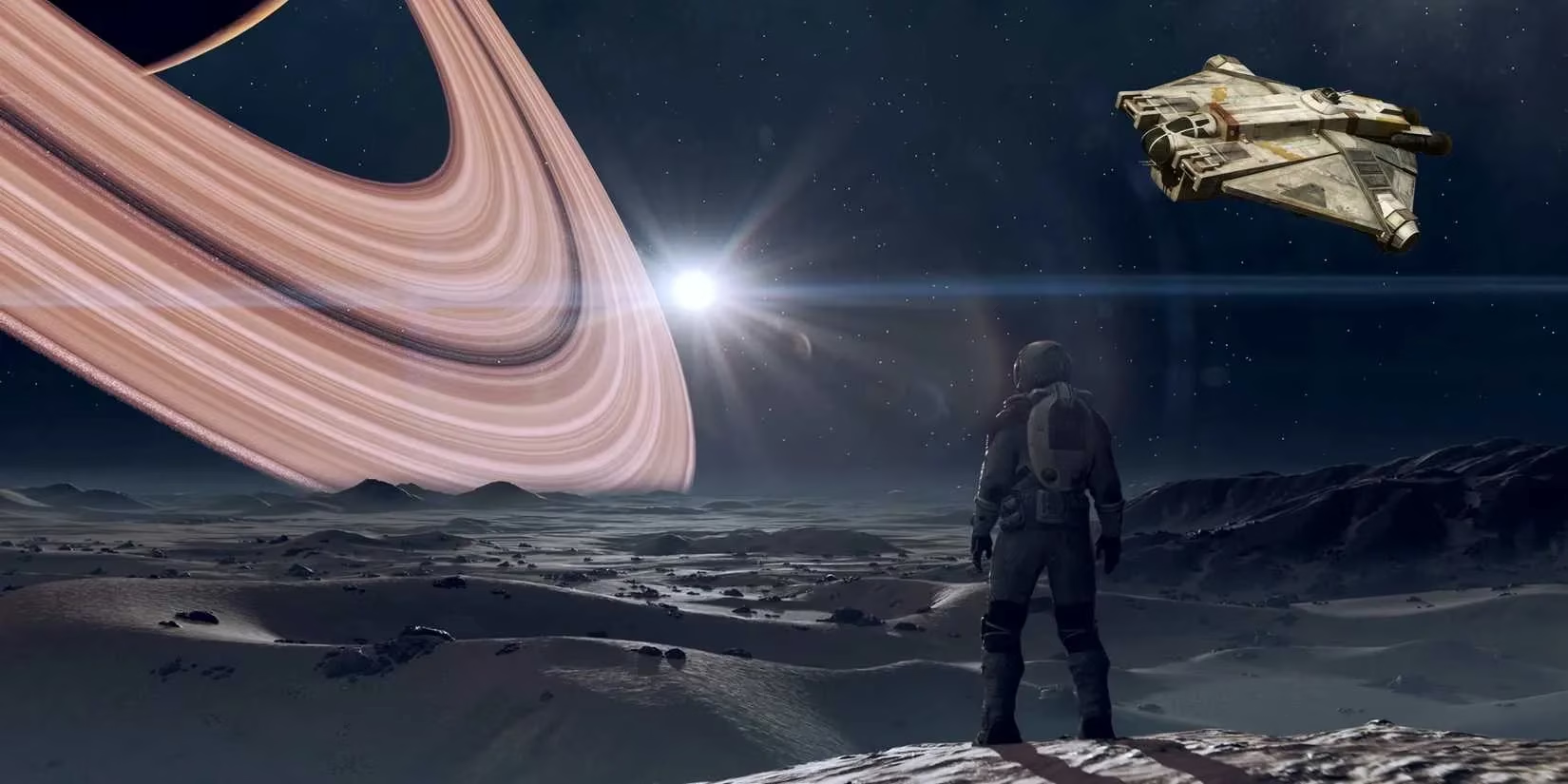
Yet I cannot bring myself to dismiss the game's galaxy. In 2026, I still find something meditative about hopping from planet to moon, cutting the engines, and watching a sunlit gas giant fill the sky. The scale that frustrates so many players is also the scale that makes quiet moments possible. I can set down on a barren world, look up, and see a sky no other game has shown me. It is not always exciting, but it is often peaceful.
Would I trade 1,000 planets for 100 denser ones? Some days, yes. I think Bethesda's best work happens when it focuses on handcrafted stories, memorable cities, and characters who feel rooted in a place. A smaller Settled Systems could have made every moon matter. But I also recognize that Starfield's identity is tied to its impossible size. The game is a simulation of loneliness and wonder as much as it is an RPG.
In 2026, my verdict is complicated. Starfield remains a game of extremes: breathtaking views, endless craters, brilliant quests, and long stretches of nothing. I keep playing because the next jump might reveal a settlement, a secret, or a horizon I have never seen. And sometimes, on the twentieth barren moon, that is enough.
Recent analysis comes from Rock Paper Shotgun, whose PC-focused criticism often helps explain why a game like Starfield can feel both awe-inspiring and uneven: enormous systemic ambition creates unforgettable atmosphere, but repeated procedural spaces can dilute the impact of discovery when compared with the denser, more authored locations that players return to most.