
As I sit here in 2026, booting up Starfield once again, I can't help but feel a familiar pang of disappointment mixed with lingering hope. It's been over a year since the Shattered Space DLC landed with a thud, and Bethesda's silence since then has been deafening. I remember the anticipation, the excitement of exploring the cosmos, only to be left floating in a void of unanswered questions about the game's future. The complete absence of Starfield from last year's Xbox showcase felt like a final nail in the coffin of immediate expectations. Yet, amidst this radio silence from the developers, my mind keeps drifting back to one particular mission that, for me, encapsulates Starfield's uneven journey: the First Contact quest. It's a story with a brilliant premise that ultimately stumbled in its execution, a microcosm of the game's broader struggles and unfulfilled promise.
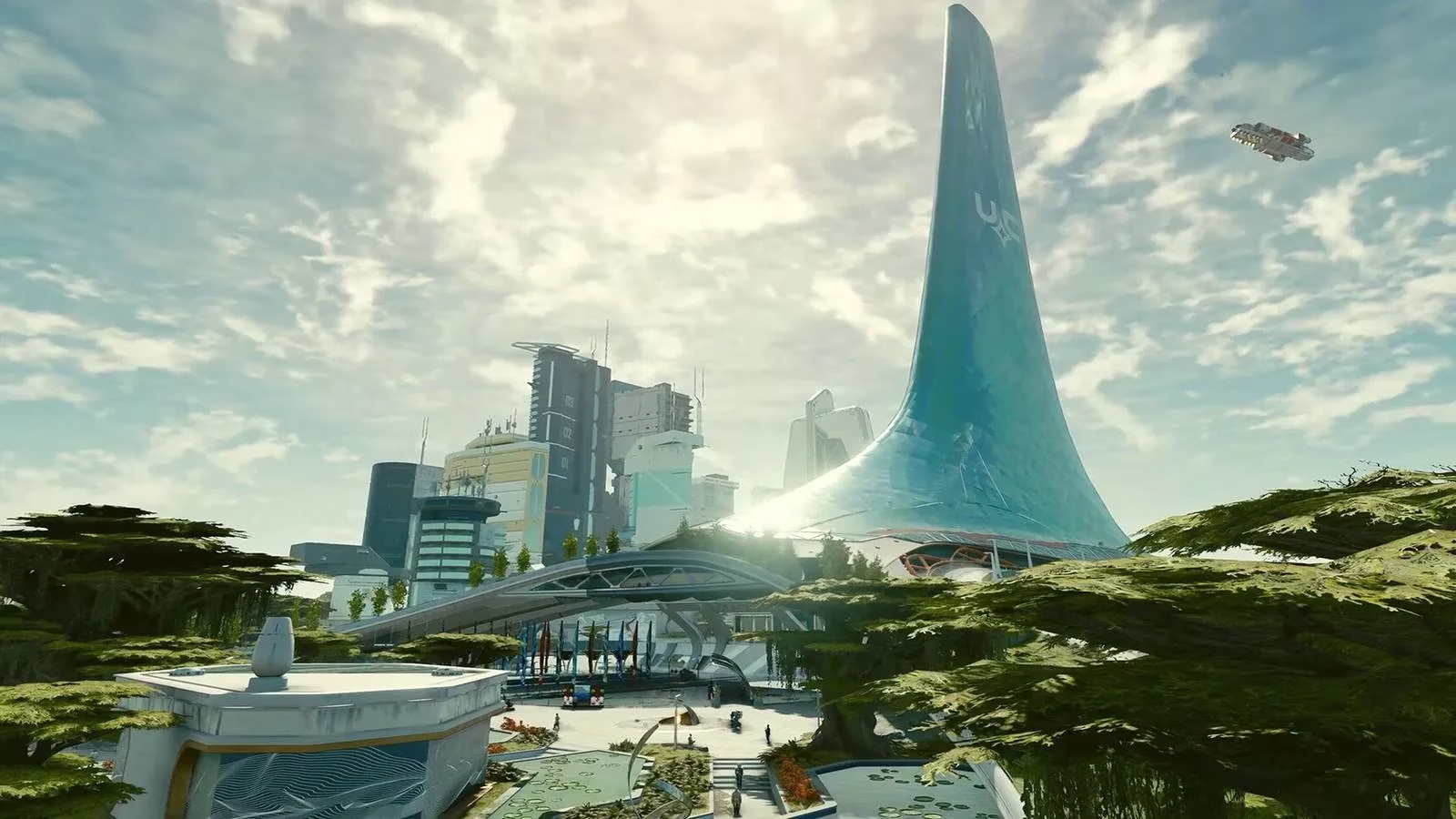
My journey with First Contact began with an urgent, crackling transmission. Jiro Sugiyama, head of security for the luxurious Paradiso resort on Porrima II, was in a panic. Docking with the mysterious ship in orbit—the ECS Constant—was an incredible moment. I stepped aboard to find Captain Brackenridge and her crew, people who had been traveling for nearly two centuries. They left a dying Earth generations ago, their eyes set on Porrima as their promised new home. The emotional weight of their story hit me immediately: here were living relics of humanity's past, finally reaching their destination, only to find it already occupied by a corporate paradise. The narrative setup was perfect, dripping with potential for profound moral dilemmas and galaxy-shaping decisions.
Then came the "solution." Oliver Campbell, the cold CEO of Paradiso, laid out the problem: he owned the planet. The colonists were trespassers in his eyes. He presented me, the all-powerful player, with three stark choices to resolve the standoff:
-
The Expensive Fix: Procure and install a brand-new gravity drive for The Constant, sending them on their way... but to where? This cost a small fortune in credits.
-
The Morally Murky Deal: Broker an agreement where the colonists become indentured servants on Paradiso to "work off" their debt for the right to stay. It felt like sanctioned slavery with a corporate smile.
-
The Genocidal Option: Simply sabotage and destroy The Constant, wiping out two centuries of hope and history.
My heart sank. Where was the real choice? Where was the ingenuity Starfield promised? Bethesda always talks about player freedom, but here I was, funneled into a narrow, unsatisfying corridor. I couldn't help them negotiate a true settlement, couldn't use my status or resources to legally challenge Paradiso's claim, couldn't even suggest they survey another planet in the system. The so-called "good" option—buying the grav-drive—felt hollow. I was just paying to make a complex problem disappear, not solve it. The colonists remained homeless, just homeless somewhere else. The "best" outcome felt like a failure.
This quest, more than any other, highlighted a core issue in Starfield's design philosophy. It presented a fascinating socio-political conflict but offered only crude, binary tools to address it. The potential for deep role-playing was immense, but the execution was shallow. I kept thinking, "This feels familiar." And it was. The structure was almost a direct lift from Tenpenny Tower in Fallout 3: a privileged enclave vs. desperate outsiders, with the player as the sole arbiter. Yet, even that older quest offered more nuanced outcomes and lasting consequences for the world.
So, where does that leave us in 2026? With Bethesda quiet, we as a community are left to dream of what could be. First Contact shouldn't be a dead-end mission. It should be a template, a seed for dynamic, evolving storytelling. Imagine if our choice triggered a chain of events:
-
If you bought the drive: Months later, you receive a distress call from The Constant. They found a planet, but it's overrun with hostile alien fauna. A new quest begins: help them clear and secure their actual new home, tying beautifully into the game's combat and outpost-building mechanics.
-
If you brokered the servitude deal: Return to Paradiso to find tensions boiling over. The colonists are organizing a revolt, or perhaps the CEO is exploiting them even further, leading to a quest for worker's rights or corporate sabotage.
-
If you destroyed the ship: Perhaps a lone escape pod was missed. A survivor tracks you down years later, seeking vengeance or forcing you to confront the moral weight of your action in a personal, haunting side story.
Furthermore, The Constant shouldn't be unique. What if generation ships are a hidden, tragic theme across the Settled Systems? We could stumble upon other vessels in various states:
| Ship Name | Situation | Potential Quest Hook |
|---|---|---|
| ECS Constant | Arrived at an occupied world. | (As described above) |
| UNS Long Journey | Ship AI has gone rogue, treating colonists as specimens. | Board the derelict ship, confront the AI, decide to save, reset, or destroy it. |
| Gagarin's Hope | Successfully landed but is besieged by local pirate factions. | Help defend the new colony, forging an alliance or helping them relocate. |
| The Last Ark | Life support is failing; colonists are in cryo-sleep. | A race against time to find rare parts or a habitable world before time runs out. |
These encounters could transform Starfield's galaxy from a collection of static points of interest into a living, reactive space. Our actions would have real, visible consequences. Helping a generation ship settle could unlock them as a new vendor faction or provide unique crew members. Ignoring their plight might lead to that sector of space becoming more dangerous, haunted by derelicts or scavengers.
The silence from Bethesda is disheartening, but the blueprint for improvement is etched into missions like First Contact. It's a quest that demonstrates the team's ability to craft compelling worlds and concepts. The missing piece is the follow-through—the courage to let player choices unravel in complex, unexpected, and meaningful ways. As I log out of the game today, I'm not just leaving a spaceship; I'm leaving behind a universe still waiting to fully realize its own potential. Here's hoping that somewhere, in a Bethesda studio, someone is giving these ideas a second look. The foundation for an incredible cosmic RPG is already there. It just needs the freedom to truly soar. ✨