
When I first stepped onto Va'ruun'kai back in 2024, just days after Shattered Space dropped, I felt an eerie sense of familiarity wash over me. It wasn't the dusty, handcrafted landscapes or the gravity-defying anomalies — it was the whispers. The cultish reverence toward the Great Serpent. As I've continued to unpack House Va'ruun's lore across multiple playthroughs into 2026, I'm convinced that Bethesda smuggled one of its oldest dark gods into the Settled Systems. The parallels between the Great Serpent and Sithis, the primordial void of the Elder Scrolls, are too deliberate to ignore.
Shattered Space finally lifted the veil on the galaxy's most elusive faction. House Va'ruun worships the Great Serpent, a celestial entity said to encircle the universe and herald the end times. Their leader, the Speaker — Anasko Va'ruun — serves as the sole conduit for the serpent's voice. But when a cataclysmic space-time tear swallowed Anasko, the house descended into theological chaos. That crisis of faith became the beating heart of the expansion's narrative. Throughout the story, I kept stumbling onto details that rang a very specific bell: the Dark Brotherhood's devotion to Sithis.
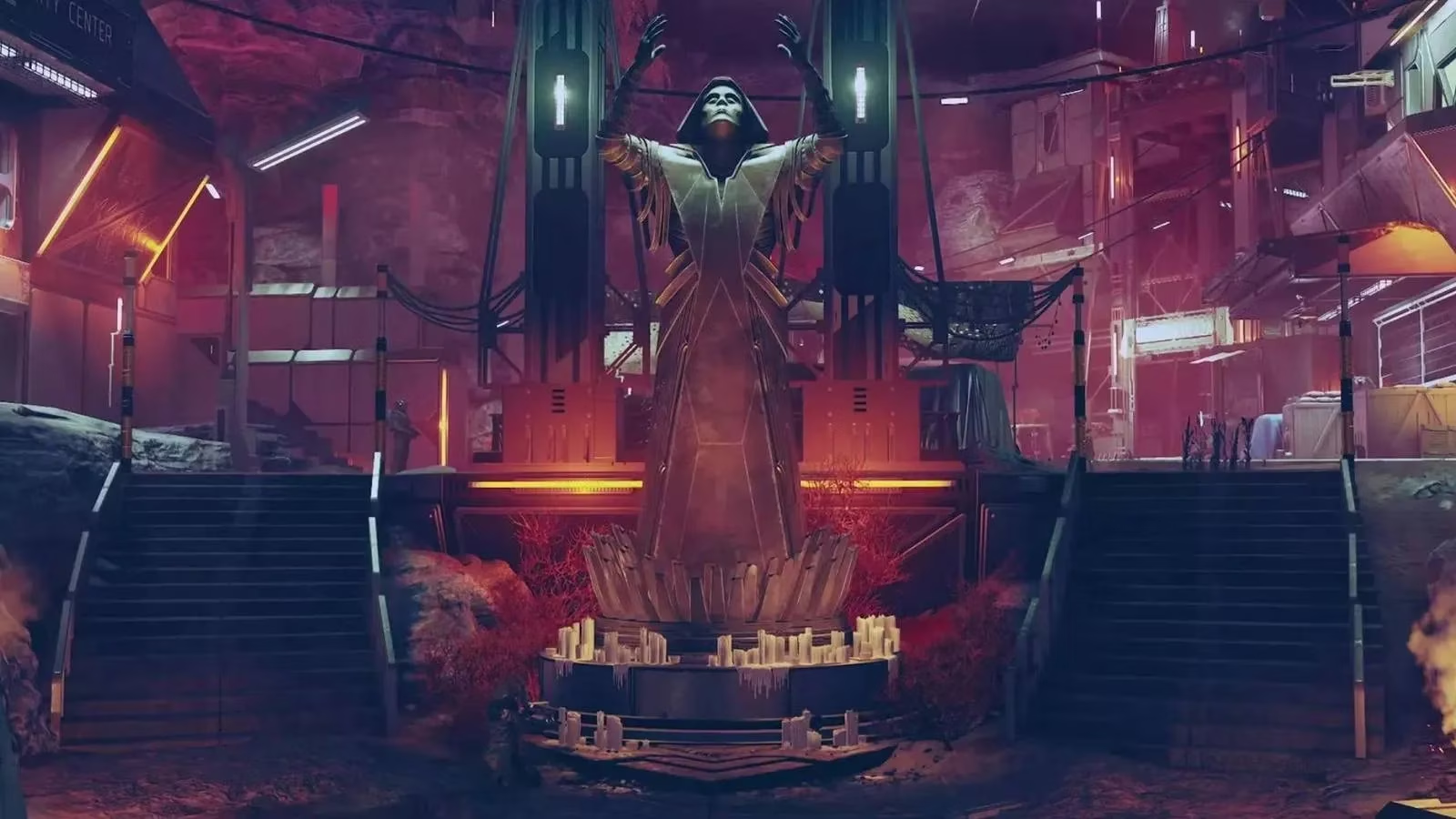
Both the Great Serpent and Sithis dwell in the shadows of organized religion. Sithis isn't a god in the traditional sense — it's the embodiment of nothingness, the force that created Lorkhan and thus reality itself. The Dark Brotherhood treats Sithis as a patron of death, communicating through the Night Mother and her Listener. Right away, the title "Speaker" felt like a direct echo of the Listener. But it goes deeper. In The Elder Scrolls 4: Oblivion, the Listener receives Sithis's commands via a ghastly statue in the Lucky Old Lady crypt in Bravil. What do we find in Va'ruun'kai? A massive, coiled serpent statue that the Speaker presumably used to commune with the Great Serpent. The Deep Dive trailer from pre-launch teased this statue prominently, and exploring the cathedral months later only cemented the visual connection.
Then there's the serpentine iconography itself. Sithis is frequently depicted as a serpent in Tamrielic lore — most strikingly in The Elder Scrolls Online, where the deity manifests as a giant snake haunting the Void. The Great Serpent needs no introduction; its name says it all. Both faiths share an apocalyptic undercurrent. While mainstream Imperial cults see Sithis as a necessary cosmic force, the Dark Brotherhood views it as a harbinger of absolute dissolution. Similarly, many within House Va'ruun regard the Great Serpent's eventual return as a promised apocalypse that will swallow the stars. The more I interviewed NPCs on Va'ruun'kai, the more I heard doomsday prophecies soaked in the same fatalism that saturates the Brotherhood's Sanctuary.
What fascinates me most is the misdirection. On the surface, a spacefaring sci-fi religion and a medieval assassin cult couldn't appear more different. Yet Bethesda wove them from similar threads: a hidden speaker, a statue conduit, a serpent god, and a congregation that exists in constant tension between devotion and terror. The Shattered Space expansion even toys with the idea that the Great Serpent might communicate through a vessel — the Speaker — much like Sithis speaks through the Night Mother rather than directly. If Anasko's disappearance severed that link, then the player's role in restoring or redefining that connection becomes a theological act, not just a rescue mission.
I've seen some lore hunters dismiss these similarities as Bethesda recycling old ideas out of laziness. I disagree. The studio has a long history of seeding cosmic horror into its universes, and these echoes feel more like an invitation to view their multiverse through a unified mythological lens. The Great Serpent and Sithis both represent the unknowable, the space before existence, the serpent that bites its own tail. Whether you're wielding a laser rifle or a Daedric dagger, you're standing before the same fundamental dread.
Two years after release, Shattered Space remains a goldmine for anyone who loves picking apart narrative DNA. House Va'ruun may have been introduced in Starfield, but their soul seems to have slithered straight out of the void I first studied in Black Marsh and Bravil. Next time you kneel before that statue on Va'ruun'kai, listen closely. That cold silence might just be the night mother. Or something even older.