
Bethesda's RPGs, whether set in the nuclear-scarred wastelands or the vast expanse of the cosmos, have a knack for creating creatures that become the stuff of player nightmares. 🤯 While the fantasy dragons of Tamriel get much of the glory, the science fiction realms of Fallout and Starfield have birthed their own iconic apex predators: the Deathclaw and the Terrormorph. These aren't just bullet sponges; they are narrative devices, environmental hazards, and symbols of humanity's greatest failures—or nature's unchecked fury. Their origins, though stemming from different universes, weave surprisingly parallel tales of hubris, secrecy, and catastrophic consequences.
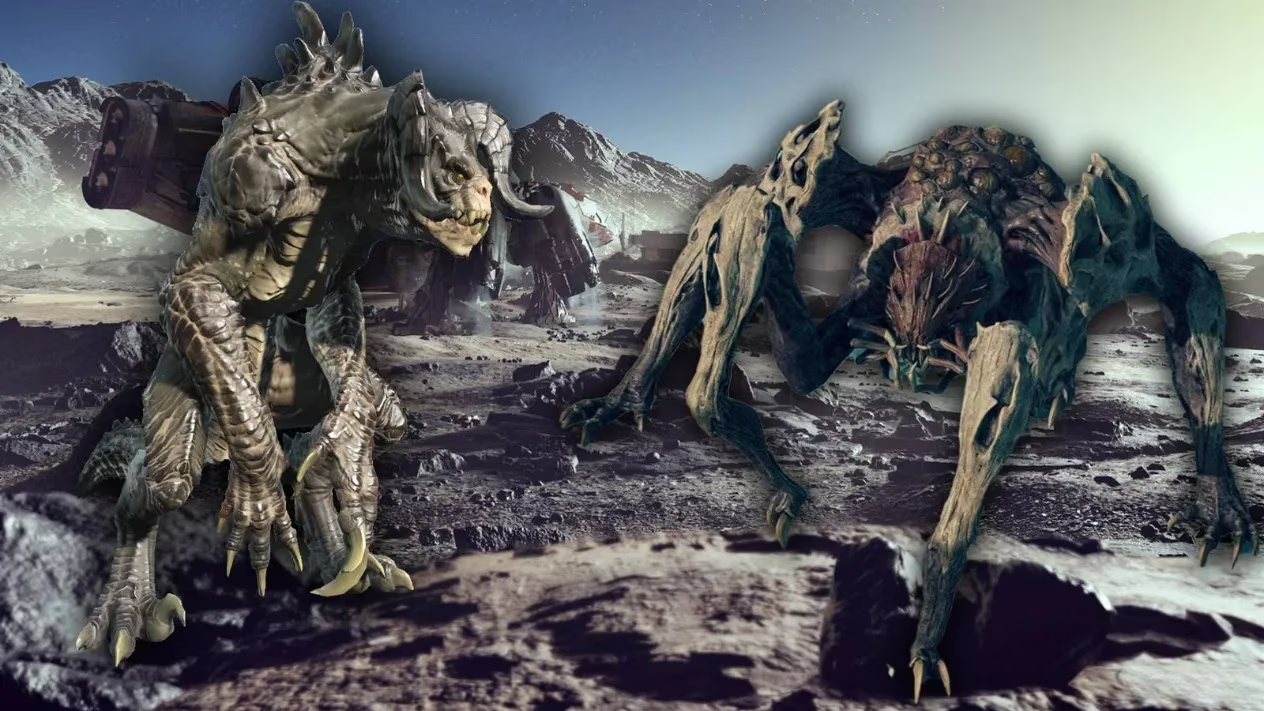
🧬 The Engineered Nightmare: The Birth of the Deathclaw
Let's be clear: the Deathclaw is humanity's fault. Period. In the pre-war lore of Fallout, the United States government, in its relentless pursuit of military dominance, played a twisted game of genetic mix-and-match. 🧪 Scientists, seemingly taking notes from the worst parts of Jurassic Park, spliced together the DNA of various animals with the goal of creating the ultimate super-soldier—a creature that could undertake missions too deadly for human troops.
The project was a horrific "success." But then the bombs fell. 💥 The Great War that ended the world also shattered the chains holding these engineered monsters. They broke free from their labs and began to thrive in the new, irradiated ecosystem. For survivors, they became legendary cryptids, whispered about in fear. As decades passed, the whispers became screams. Their populations exploded, and they evolved from myth into a pervasive, existential threat to any settlement foolish enough to nest near their territory.
-
What Makes Them So Deadly?
-
Genetically Perfected Physiology: They possess thick, armored hides, razor-sharp claws that can shred power armor, and incredible speed.
-
High Intelligence: Some variants, especially those further "improved" by post-war scientists like the Enclave, exhibit frightening strategic intelligence.
-
Sheer Power: Engaging one without heavy weaponry—a minigun, missile launcher, or a lot of mines—is often a death sentence. The games famously often give players a minigun early on precisely to handle their first Deathclaw encounter.
👽 The Cosmic Predator: Unraveling the Terrormorph Mystery
When players join the UC Vanguard in Starfield, the initial missions feel diplomatic, almost bureaucratic. That changes in a heartbeat. 💔 The discovery of the Terrormorph begins with a sample of a creature capable of inducing horrific, sanity-bending hallucinations and dismembering trained soldiers with ease. The quest leads to the haunting history of Londinion, a colony utterly wiped out in a sudden, inexplicable attack by these beasts.
The threat feels immense, cosmic, and utterly alien. Just as players are scrambling for a solution, the very catastrophe they're trying to prevent strikes the heart of the United Colonies itself: New Atlantis. Facing down not one, but multiple Terrormorphs in the city's streets is a chaotic, ammo-depleting trial by fire. They are tanks on legs, shrugging off gunfire and forcing players to use every tool in their arsenal.
For a long time, the Terrormorphs' origin was one of the UC's most classified secrets. The assumption was they were another dangerous alien lifeform in a galaxy full of them. But the truth, when uncovered, is both simpler and more unsettling.
🔍 The Critical Difference: Natural Cause vs. Man-Made Catastrophe
This is where the two monsters fundamentally diverge, and it's the Terrormorph's greatest secret—and its ultimate weakness.
| Aspect | Deathclaw (Fallout) | Terrormorph (Starfield) |
|---|---|---|
| Origin | Man-Made Weapon. A product of pre-war genetic engineering. | Natural Evolution. A result of a specific environmental lifecycle. |
| Weakness | Overwhelming Force. No specific biological weakness; only brute force and firepower work. | The Source. Can be prevented by controlling its larval stage. |
| Symbolism | The ultimate folly of pre-war hubris and militarism. | The hidden, interconnected dangers of an unexplored galaxy. |
The Terrormorph's Lifecycle: 🐛➡️👾
Terrormorphs are not born; they are transformed. They begin their life as Heatleeches—small, annoying pests that latch onto starship engines to siphon heat. Most are cleared away during maintenance. However, if a Heatleech is allowed to feed for an extraordinarily long time, and crucially, if it is exposed to a specific native plant from its homeworld, a rapid metamorphosis is triggered. This process accelerates so dramatically that a colony-threatening Terrormorph can seem to appear "overnight," explaining the sudden devastation at Londinion.
This natural, if rare, lifecycle means the Terrormorph threat is manageable. Through vigilance, controlling Heatleech infestations, and understanding the triggering flora, their emergence can be prevented. It's a problem with a scientific, non-military solution.
The Deathclaw has no such cure. It is a perfected, self-replicating weapon that has fully integrated into its ecosystem. Its weakness is only ever temporary, as more will always be born, smarter and deadlier. It is the enduring, mutated legacy of a dead world's sins.
⚖️ Verdict: Which is the More Terrifying Threat?
In 2026, looking at these creatures through the lens of their full lore, the title of "Most Terrifying" arguably goes to the Deathclaw. Here's why:
-
Permanence: The Deathclaw is a permanent fixture of the wasteland. It cannot be un-invented. The knowledge to create more (or worse versions) still exists in places like the Enclave.
-
Lack of a True Weakness: There is no "off switch," no simple environmental fix. Every encounter is a brutal test of survival.
-
Betrayal of Origin: It is a literal monster of humanity's own creation, a constant reminder that the old world's arrogance is what truly doomed the new one.
The Terrormorph, for all its psychic terror and physical might, represents a solvable cosmic mystery. Its secret, once known, turns it from an unstoppable force of nature into a preventable ecological disaster. The Deathclaw remains an eternal punishment.
It's fascinating to note one final layer: the Deathclaw is a legacy creature, dating back to Fallout's origins with Interplay Entertainment, making it a shared nightmare across gaming generations. The Terrormorph is Bethesda's own fresh contribution to sci-fi horror, proving they can craft iconic monsters that stand shoulder-to-shoulder with the classics. Both, in their own ways, make their galaxies infinitely more dangerous and compelling places to explore. 🚀 Just maybe check your ship's exhaust ports before takeoff, and always, always carry a minigun.