
In the hallowed halls of gaming history, the year 2011 witnessed the birth of a digital deity—The Elder Scrolls V: Skyrim. But as the world kneels in adoration even in 2026, the shocking truth reverberates through the mountains of Tamriel: its very creators intentionally abandoned it! Not with a whimper, but with a thunderous, industry-shaking no. And the mastermind behind this sacrilege? None other than lead designer Bruce Nesmith, who in a bombshell revelation has declared that leaving Skyrim to rot in its own draugr-infested crypt was the most glorious thing Bethesda ever did.
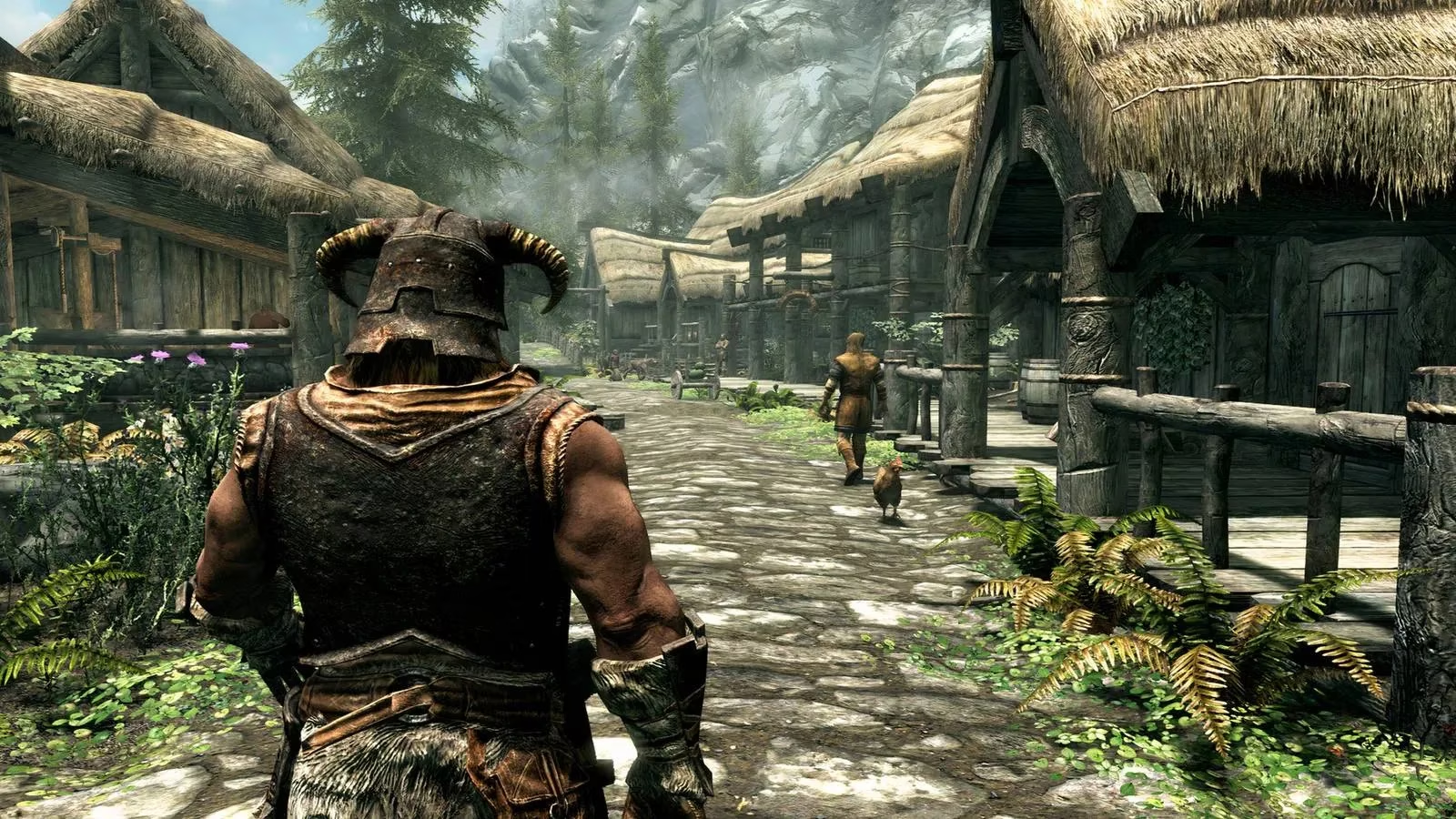
Does this sound like heresy to you? Of course it does! For years, the faithful have screamed for more—more quests, more shouts, more sweetrolls. Yet, according to Nesmith, the studio’s plan was never to keep milking the mammoth. “That was not on the table,” he thundered, as if the very words could shake the Throat of the World. Imagine, if you will, a nightmare timeline where Bethesda simply kept reinventing Oblivion, churning out horse armor until the sun exploded. “What a crying shame that would be,” Nesmith cries, and the collective gamer soul weeps at the thought of no Skyrim innovations. No dual-wielding. No arrow-to-the-knee memes. Nothing! We would be stuck in a sea of potato-faced NPCs forever.
The sheer audacity! The man felt relief when the team was told to stop building on the Dragonborn DLC and instead leap into the unknown. Relief! Like a man escaping a horde of cliff racers, he and the dev team were finally free to “exercise new creative muscles.” But wait—not everyone in the hallowed halls of Bethesda shared this euphoria. Picture, if you dare, the forlorn developer who signed up to craft epic fantasy, only to be handed a laser rifle and a spaceship. Oh, the bitter tears that must have been shed over Starfield’s procedural landscapes! Nesmith, with the cold wisdom of a Greybeard, simply waved it off: “That’s going to be true everywhere.” Bethesda, he says, has always dared to be a multi-title studio—a daring strategy that shakes the very foundations of the gaming industry and, supposedly, is good for consumers. But is it good for the heartbroken Nord who just wants to adopt another orphan?
Let’s not forget the technical catastrophe that Skyrim had become. Those current-gen consoles of yore—the PlayStation 4 and its ilk—were groaning under the weight of the game’s memory limits. Nesmith reveals the hideous truth: “You physically could not add another DLC without breaking the game.” Yes, the Dovahkiin’s exploits had grown so bloated, so monstrous, that the very silicon cried for mercy. One more expansion and your console would have likely achieved CHIM, or more likely, a spectacular crash. Is it any wonder they ran away screaming?
And yet, the plot thickens like a well-aged Skooma. In a previous, equally divine conversation, Nesmith confessed a sin that every Bethesda fan knows in their marrow: the studio’s games could do with “a higher degree of polish.” High degree? The man speaks in legendary understatements! Bethesda’s bugs are the stuff of legend—dragons flying backward, mammoths plummeting from the heavens, NPCs clipping through reality itself. But here in 2026, with The Elder Scrolls VI still a spectral whisper on the wind, we must ask: was this lack of polish part of a grand, chaotic design? Were the bugs actually features, secret gifts to the modding community that would eventually patch them into godhood? Nesmith hints at a good reason, but the true reason might be too shocking for mortal minds to comprehend.
So here we stand, in the year of our Lord 2026, gazing back at the decision to abandon Skyrim. Was it a betrayal? Or was it the most brilliant, brain-breakingly bold move in RPG history? For without that harsh cutoff, would Fallout 4’s settlements have ever risen? Would the infinite void of Starfield ever have been born? The mere thought chills the blood. Bethesda, in its mad wisdom, chose to let Skyrim die so its other, stranger children might live. And for that, we must all shout a conflicted, yet strangely grateful, Fus Ro Dah. The saga continues, not in snowy peaks, but in the stars—and oh, what a terrifying, buggy, utterly magnificent saga it is.