
The cargo bay lights flickered once before the ramp lowered with a hiss, and Alex’s gloved fingers tightened around the grip of a modified Maelstorm rifle. In the year 2026, three years after its initial launch, Starfield had finally crossed the constellation to PlayStation 5, and he wasn’t about to let the moment pass like just another grav jump. He’d read every rumor, followed every vague comment from Phil Spencer, and waited while Indiana Jones, Forza Horizon 5, and even Hi-Fi Rush made the leap. Now the dream was real, and his first footstep onto Kreet was accompanied by a subtle, directional pulse through the DualSense controller—a delicate crunch of alien soil that traveled from palm to fingertip.
He’d expected a graphics upgrade or faster loads. What Alex hadn’t prepared for was the way the controller responded as if the galaxy had a pulse. The first time he squeezed the trigger to fire, the resistance built up smoothly—the adaptive trigger simulating the weight of a physical mechanism. It wasn’t just a button press; it was the tension of a beefy ballistic piston. Each burst from the Maelstorm translated into a distinct, reactive shove against his index finger, and when he switched to a mag-sniper, the break point felt crisper, demanding a deliberate squeeze. Alex found himself engaging Crimson Fleet pirates not because a quest marker told him to, but because the gunplay had transformed into something too tactile to ignore.
That morning, his exploration of Jemison became a masterclass in haptic storytelling. The DualSense’s haptic feedback actuators, far more expressive than the rumble motors he remembered from his old Xbox, painted a world of texture. As he sprinted through the spaceport, boots thudding on metal grating, the controller vibrated with a sharp, metallic patter. Then, stepping into the softer ground of the terraformed park, the sensation shifted to a deeper, muffled roll. It was the same technology that had made Astro Bot a wonder and Death Stranding a physically weighted journey, but here it felt purpose-built for the Settled Systems.
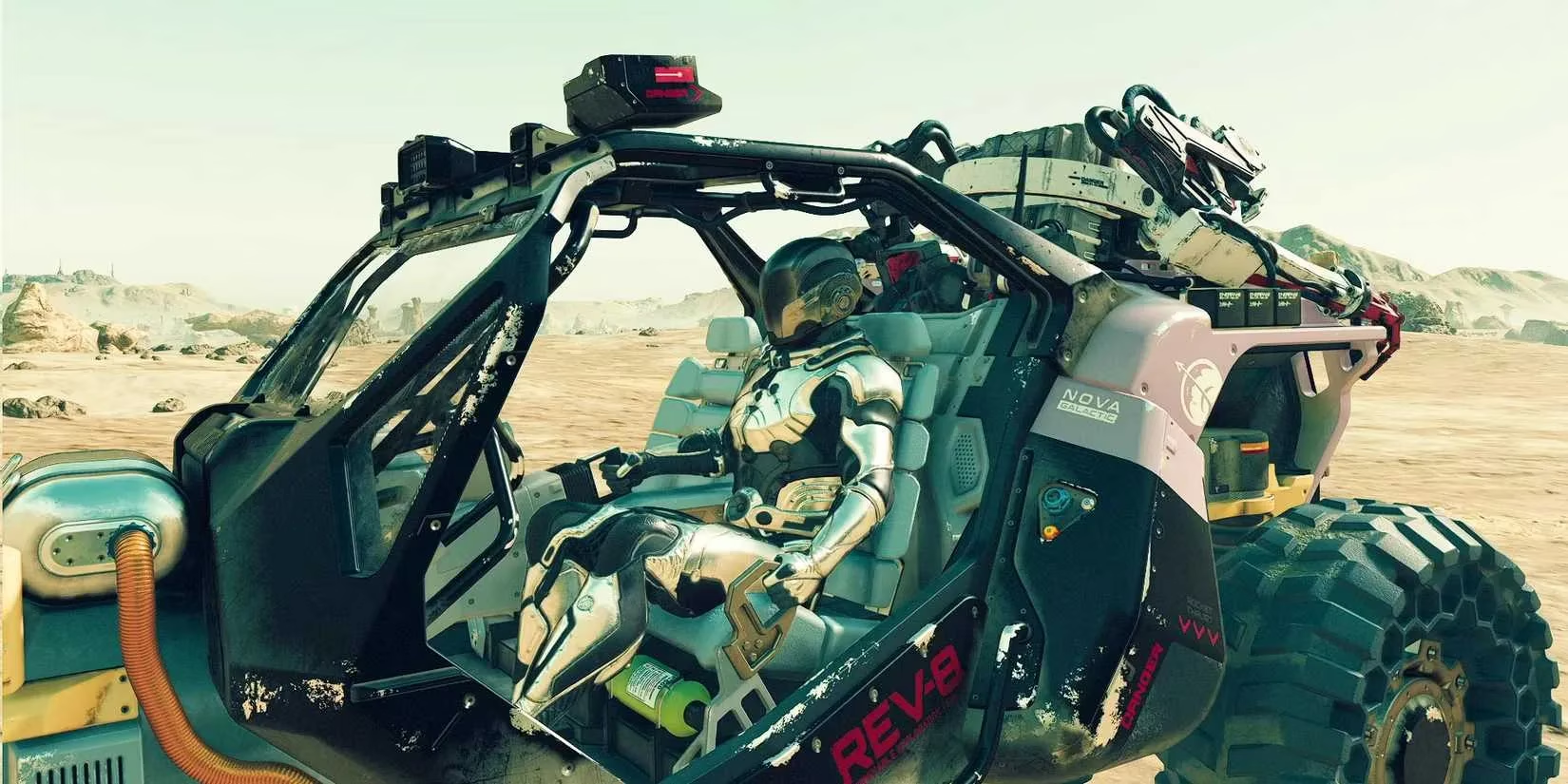
Later, when he summoned the REV-8 on a dusty moon of Tau Ceti, the immersion deepened. Alex spun the wheel and the controller delivered the granular crunch of tires biting into regolith. Driving at speed, the haptics created a rhythmic, chattering sensation that mirrored every bump and ridge. When he engaged the jet boost, the vibration tightened into a focused, high-frequency surge right in the grips, as if the rocket nozzle were venting directly into his hands. He remembered the old Xbox controller’s humble rumble—functional, but never this articulate. That version could never make you feel the difference between drifting through an asteroid field and slamming into the pilot seat after a botched landing.
Combat in zero-G became a symphony of micro-sensations. Drifting through a disabled casino station, Alex’s boost pack triggered a series of quick, directional pops in the controller. The adaptive triggers were reprogrammed with each weapon swap: a semi-automatic pistol offered a light, rapid wall that encouraged paced fire; a heavy cutter hummed and kicked back with a slow, grinding tension, the trigger almost fighting him. When he took a grazing hit, the haptics erupted on one side, instantly communicating the threat’s direction. It was information delivered through instinct, not a HUD.
What truly sold the experience, however, were the subtle environmental details that Bethesda’s Shattered Space expansion had enriched. On a low-gravity moonlet, each leap made the controller feel almost weightless, the haptic pulse at the peak of his jump vanishing into a soft tick at the apex. Touchdown was a gentle, sustained flutter. On a high-gravity world, though, the landing felt like a blunt, deep thud that traveled up his forearms. Alex could close his eyes and know the gravity class simply by how the DualSense behaved—a radical leap from the flat, single-note vibration of older platforms.
He’d never considered himself a controller purist, but after ten hours, the PS5 version felt like the definitive way to play. The Xbox Series X|S offered the same universe, the same branching quests, and the same 1,000 planets, but its controller lacked the vocabulary the DualSense spoke fluently. The core adventure was unchanged—building outposts, smuggling contraband, arguing with Constellation—but the physical layer of feedback made the galaxy heavier, colder, and more present. Alex didn’t just see the strange new worlds. He felt them.
Of course, critics had grumbled online that haptic feedback and adaptive triggers couldn’t fix a game’s flaws, and they were right. If someone disliked Starfield’s reliance on fast travel or its quieter narrative stretches, the DualSense wouldn’t rewrite their review. But for a newcomer like Alex, who had waited through the entire exclusivity window and dived in with fresh eyes, the PS5’s technology didn’t just complement the journey—it completed it. The game wasn’t just on his screen anymore; it was buzzing, trembling, and kicking in his grasp, a constant invitation to explore just one more uncharted moon before the day ended.